李勇秋:重庆13岁街舞传奇
一、从街头启蒙到世界之巅:少年的街舞之路
1. 5 岁结缘,埋下热爱的种子
偶然在街头看到霹雳舞表演后,来自重庆两江新区的李勇秋便缠着父母报班,从此与街舞结下不解之缘。没有天赋异禀的神话,只有日复一日的汗水与坚持—— 他从基本功练起,从简单的步伐到复杂的地板动作,一步步打磨自己的身体与意志。
2. 极致自律,用重复打磨极致
李勇秋的训练日常,是无数少年追梦的缩影:
每周训练 5-6 天,放学后至少练 2 小时,寒暑假更是全天泡在舞房;
为了一个高难度动作(如托马斯全旋),他会反复尝试上百次,膝盖磨出淤青、手掌磨出血泡也绝不放弃;
教练评价他:“眼里有光,肯吃苦,是天生的舞者。”
3. 文化融合,走出中国风街舞路
不同于盲目模仿西方风格,李勇秋主动从中国传统文化中寻找灵感:
研究李小龙纪录片,将武术发力方式融入街舞;
用琵琶版《十面埋伏》配乐,把太极、醉拳等元素转化为舞蹈语言;
让街舞不再只是“舶来品”,而是承载中国少年风骨的艺术表达。
二、赛场封神:打破垄断的冠军时刻
1. 登上 “街舞世界杯” 舞台
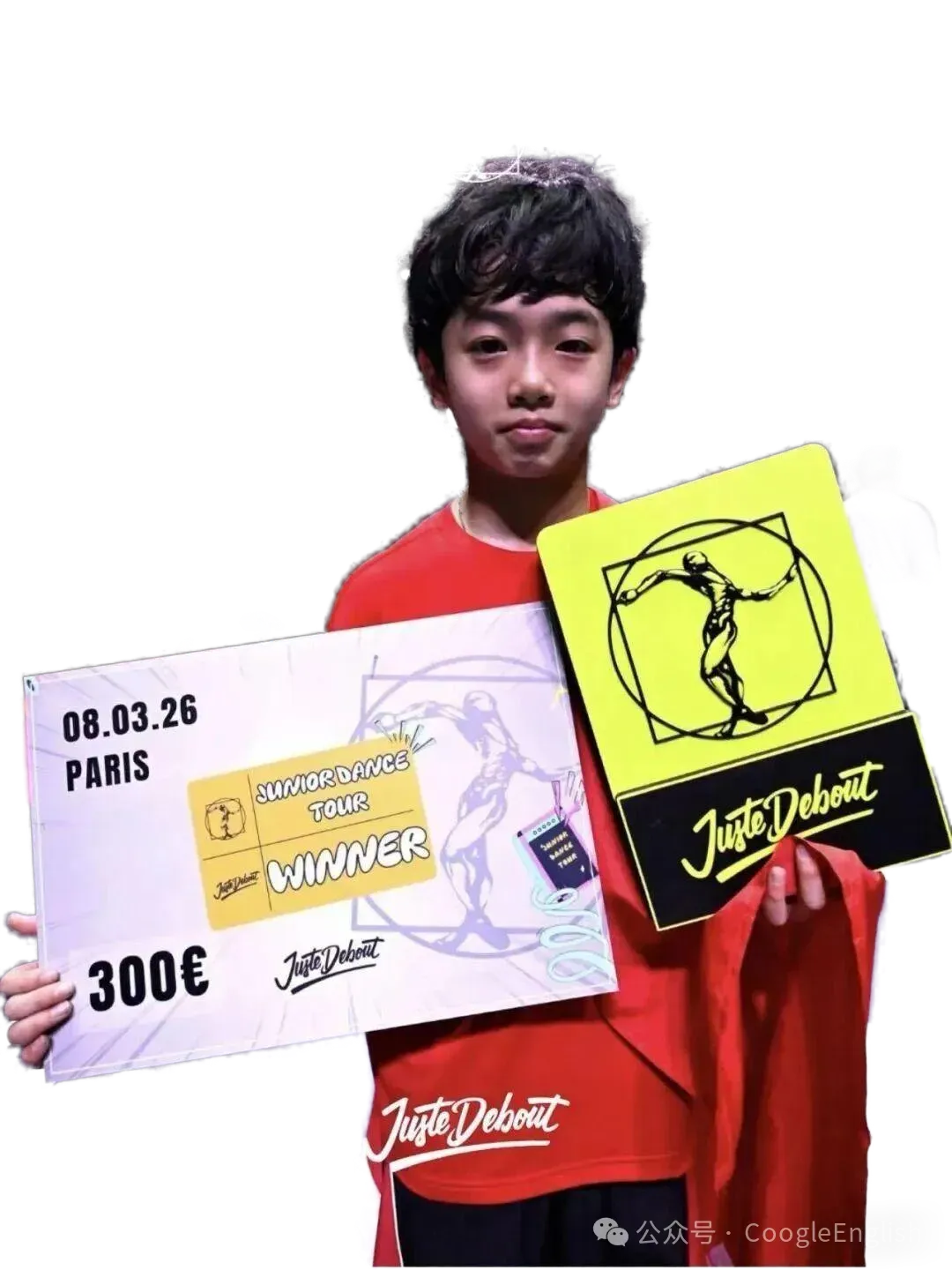
2026 年,李勇秋站上法国巴黎 “JUSTE DEBOUT” 街舞总决赛的舞台 —— 这项赛事被称为 “街舞世界杯”,是全球最具影响力的街舞赛事之一,日韩选手曾在该组别垄断十余年。
2. 逆风翻盘,决赛逆转夺冠
面对身高近 1.9 米的强敌,李勇秋开局落后却沉着冷静:
半决赛用醉拳滑步 + 直升机旋转的组合惊艳全场,拿下高分;
决赛最后一轮,他以托马斯全旋衔接后空翻,再用稳定头转收尾,整套动作爆发力与美感兼具;
裁判席齐刷刷举起满分牌,他成为中国首位在该赛事 Junior 组别夺冠的 B-boy。
3. 身披国旗,让世界看见中国少年
夺冠后,李勇秋身披五星红旗绕场,用少年的热血与骄傲,向世界宣告:中国街舞,正在崛起!
13 岁重庆少年李勇秋:街舞世界杯夺冠的高光动作与成长启示
一、决赛制胜:三大高光动作解析
1. 醉拳滑步 + 直升机旋转(开场迷惑技)
动作拆解:以中国武术醉拳踉跄步态开场,身体重心左右摇晃,模仿醉汉姿态迷惑对手与裁判;顺势衔接直升机旋转(Helicopter),双手撑地、双腿伸直并拢,以腰腹为轴高速水平旋转,脚尖点地精准控制方向。
技术亮点:打破传统 B-boy 固定套路,将武术 “形散神不散” 的韵律与街舞爆发力结合,极具辨识度,是决赛逆转的关键伏笔。
[英语拓展](高考适用):
drunken boxing-inspired steps(醉拳风格步伐)
helicopter spin(直升机旋转)
blend traditional Chinese martial arts with street dance(将中国传统武术与街舞融合)
2. 托马斯全旋 + 后空翻衔接(中段爆发技)
动作拆解:完成托马斯全旋(Thomas Flare)时,双腿高度与旋转速度远超同龄选手,核心控制力稳定;全旋收尾瞬间借势发力,无缝衔接后空翻(Backflip),落地即启动下一组动作,全程无停顿。
技术亮点:高难度力量动作的流畅衔接,展现极强的身体协调性与爆发力,直接拉满裁判评分,实现比分反超。
[英语拓展](高考适用):
Thomas Flare(托马斯全旋)
backflip transition(后空翻衔接)
seamless flow between power moves(力量动作间的无缝衔接)
3. 头转收尾 + 武术 Pose(终结记忆点)
动作拆解:以头转(Headspin)作为终结动作,转速快且稳定,头部与地面接触点精准,无晃动失误;收尾时稳稳站起,摆出李小龙经典握拳 Pose,呼应中国文化主题。
技术亮点:稳定头转彰显经年累月打磨的基本功,武术 Pose 强化 “中国风” 记忆点,让裁判与观众印象深刻。
[英语拓展](高考适用):
headspin finale(头转收尾)
Bruce Lee-inspired pose(李小龙风格姿势)
solid basic skills honed through years of practice(经年累月打磨的扎实基本功)
二、文化融合:中国风街舞的教学价值
动作元素 | 文化来源 | 街舞应用 | 课堂教学启示 |
醉拳步态 | 中国传统武术 | 迷惑对手,创造节奏变化 | 引导学生理解文化创新:将本土元素融入国际舞台,打造独特风格 |
琵琶配乐《十面埋伏》 | 中国古典音乐 | 铺垫情绪,强化动作叙事性 | 帮助学生体会艺术表达:用音乐传递故事与情感,让动作更有感染力 |
五星红旗 Pose | 国家荣誉感 | 赛后庆祝,传递文化自信 | 培养学生家国情怀:在国际赛场展现中国少年风貌,增强民族自豪感 |
三、成长启示:写给学生的励志思考
自律与坚持:李勇秋每周训练 5-6 天,放学后至少练 2 小时,寒暑假全天泡在舞房。一个高难度动作反复尝试上百次,膝盖淤青、手掌血泡都从未放弃,用重复打磨成就极致。
文化自信:他没有盲目模仿西方街舞风格,而是从李小龙武术、中国古典音乐中寻找灵感,走出了独一无二的“中国街舞” 道路,打破日韩选手十余年垄断。
抗压与逆袭:决赛开局落后时,他冷静调整战术,用高难度组合完成逆转,展现了强大的心理素质—— 真正的强者,从不畏惧暂时的低谷。
四、高考英语写作素材(可直接套用)
At just 13 years old, Li Yongqiu, a young B-boy from Chongqing, won the global championship at the "JUSTE DEBOUT" street dance competition, known as the "Street Dance World Cup". By blending traditional Chinese martial arts, like drunken boxing, with powerful street dance moves such as the helicopter spin and Thomas Flare, he broke the long-term monopoly of Japanese and Korean dancers and showed the world the charm of Chinese youth. His story tells us that with passion, persistence, and cultural confidence, we can shine on the international stage.
年仅13岁的重庆霹雳舞新星李永秋,在被誉为‘街舞世界杯’的‘ JUSTE 对决’大赛中勇夺全球冠军。他将醉拳等中国传统武术与直升机旋转、托马斯·弗莱尔等炫酷街舞动作完美融合,打破了日韩舞者长期的垄断地位,向世界展现了中国青年的风采。他的故事告诉我们:只要怀揣热情、坚持不懈并自信于文化,我们就能在国际舞台上大放异彩。
《当街舞遇上歌:李勇秋的冠军时刻,我为他写了首歌》
秋之舞-勇舞
眼里有光,少年正当强。 勤学苦练,勇敢去闯。 中西节拍,脚下飞扬。 街舞少年,自信登场。 李勇秋,勇敢向前方。 眼里有光,心有热望。 跳出热爱,跳出锋芒。 向善向美,追逐阳光。 少年强,中国更闪亮。 努力向上,不负时光。 向光向善,向自由飞翔。 未来有我,为国争光。 每滴汗水,都在发光。 做最好的自己,就是榜样。 李勇秋,勇敢向前方。 眼里有光,心有热望。 跳出热爱,跳出锋芒。 向善向美,追逐阳光。 少年强,中国更闪亮。 努力向上,不负时光。 向光向善,向自由飞翔。 未来有我,为国争光。 向光,向善,向远方。 少年自有,少年的光。 |
Li Yongqiu: A 13-Year-Old Street Dance Legend from Chongqing
At just 13 years old, Li Yongqiu, a young B-boy from Chongqing, has become the first Chinese winner of the Junior category at the "JUSTE DEBOUT" street dance competition, widely known as the "Street Dance World Cup". His journey from a curious kid watching street performances to a global champion is a story of passion, persistence, and cultural confidence.
His Dance Journey
Li fell in love with street dance at the age of 5, after watching a breakdancing performance on the street. He begged his parents to let him take lessons, and from then on, he dedicated himself totraining. He practices 5 to 6 days a week, spending at least 2 hours after school perfecting his moves. During holidays, he trains all day in the dance studio. For a difficult move like the Thomas Flare, he will try it hundreds of times, even when his knees are bruised and his palms are covered in blisters.
Instead of simply copying Western styles, Li draws inspiration from traditional Chinese culture. He studies documentaries about Bruce Lee, integrating martial arts movements into his dance. He has used the pipa version of Ambush from Ten Sides as music for his performances, blending elements of tai chi and drunken boxing into his steps. He wants street dance to be more than just an imported art form—he wants it to carry the spirit of Chinese youth.
The Road to Victory
In 2026, Li competed in the "JUSTE DEBOUT" final in Paris, France. For over a decade, Japanese and Korean dancers had dominated the Junior category. Facing a nearly 1.9-meter-tall opponent, Li fell behind in the early rounds but stayed calm.
In the semi-finals, he wowed the audience with his "drunken boxing steps" combined with a helicopter spin. In the final round, he performed a seamless sequence of Thomas Flare, backflip, and headspin, ending with a classic Bruce Lee pose. The judges held up perfect scores, and Li became the first Chinese B-boy to win the title. After the victory, he wrapped himself in the national flag and walked around the stage, showing the world the pride of Chinese youth.
His Message
"All the hard work was worth it," Li said. "I want to keep working hard and let more people see the charm of Chinese street dance."
[酷歌阅读理解] Reading Comprehension
1.Detail Understanding (细节理解题)
What is the "JUSTE DEBOUT" competition known as?
A.The World Breakdancing Championship.
B.The Street Dance World Cup.
C.he International Hip-Hop Festival.
D.The Paris Dance Grand Prix.
2. Detail Understanding (细节理解题)
How did Li Yongqiu first become interested in street dance?
A.He learned it from his school teacher.
B.He watched a performance on the street at age.
C.He was inspired by a video game.
D.He joined a dance club at school.
3. Word Guessing (词义猜测题)
What does the underlined word "dominated" in Paragraph 3 most probably mean?
A.controlled
B.watched
C.changed
D.admired
4. Text Structure (篇章结构题)
Which of the following best describes the structure of the passage?
A.Problem → Solution → Result
B.Cause → Effect → Conclusion
C.Introduction → Journey → Victory → Message
D.Comparison → Contrast → Summary
5. Main Idea (主旨大意题)
What is the main idea of the passage?
A.The history of the "JUSTE DEBOUT" competition.
B.How to become a successful street dancer.
C.Li Yongqiu’s journey to becoming a global street dance champion.
D.The influence of Chinese culture on modern dance.
Answers & Explanations
1.B – The first paragraph clearly states that "JUSTE DEBOUT" is widely known as the "Street Dance World Cup".
2.B – The second paragraph mentions that Li fell in love with street dance at age 5 after watching a breakdancing performance on the street.
3.A – "Dominated" here means that Japanese and Korean dancers had controlled or held the top positions in the competition for over a decade.
4.C – The passage introduces Li Yongqiu, then tells his dance journey, his path to victory, and finally his message to the world.
5.C – The entire passage focuses on Li Yongqiu’s story from his early interest in dance to his global championship win.