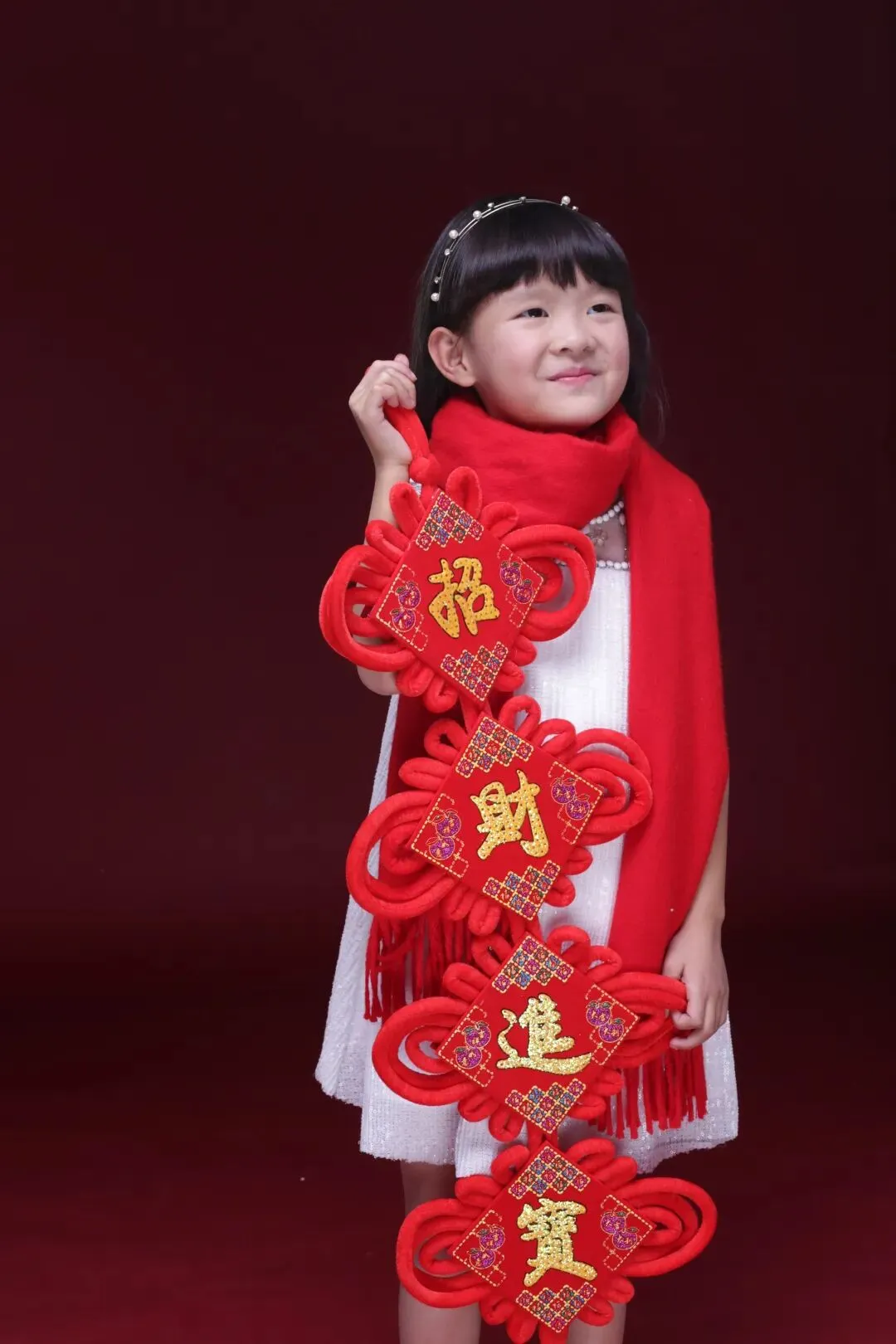
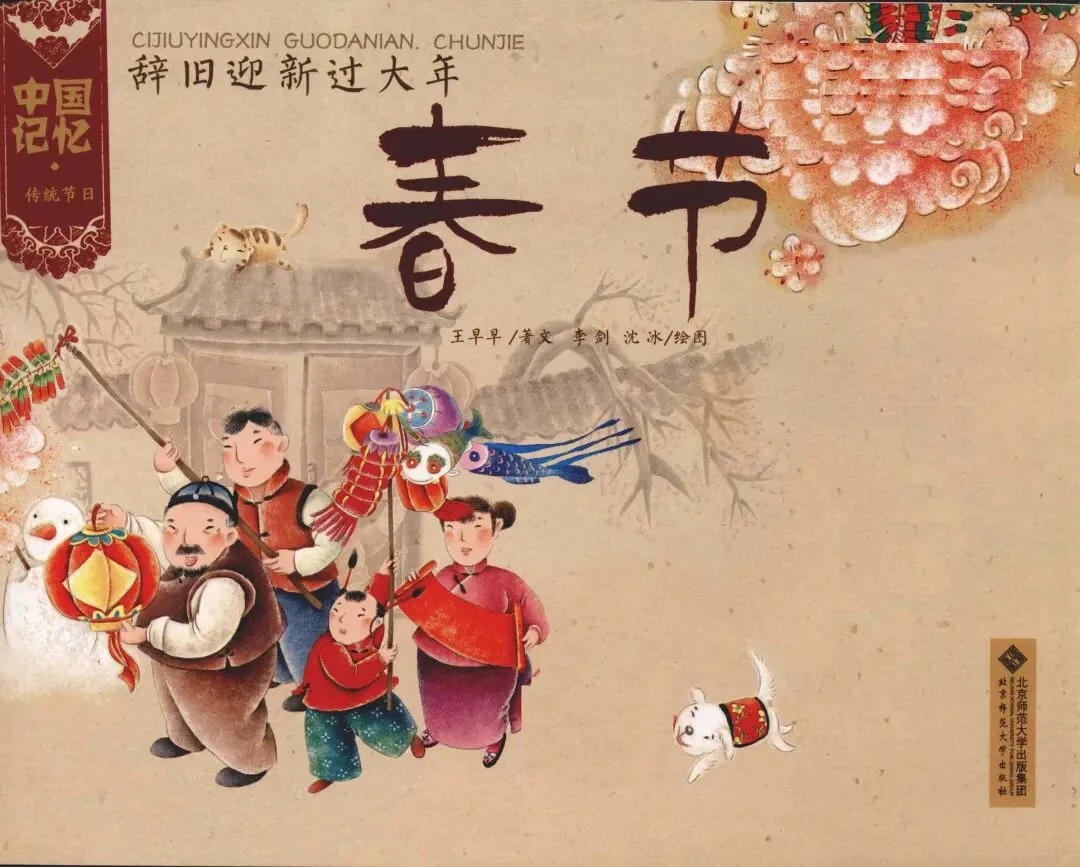
Warm Lights Within Reach, the Flavor of the New Year Like a Song :The National Warmth in the Original Picture Book 《Spring Festival—Bidding Farewell to the Old and Welcoming the New》
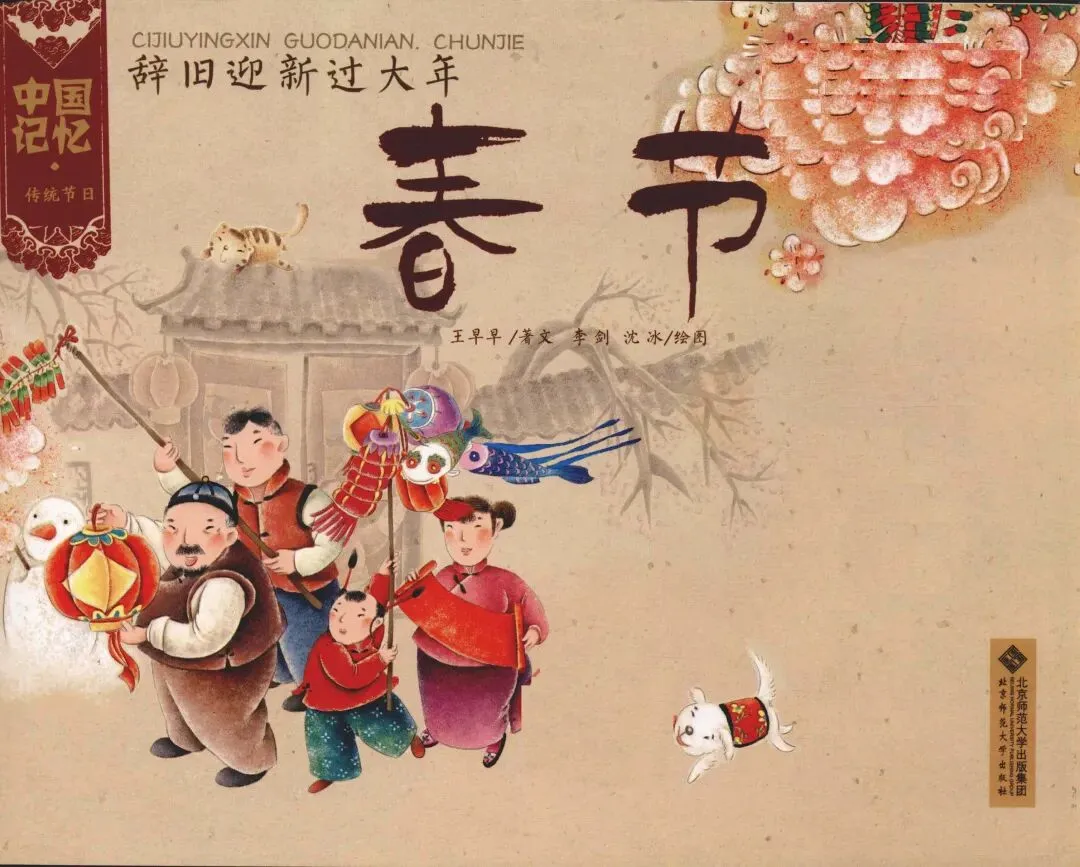
When the first sharp “bang! bang!”of firecrackers splits the silence of the winter night, when the rich aroma of dumplings fills every corner of the house, the flavor of the New Year from childhood surges back like a spring tide. In the original picture book 《Spring Festival—Bidding Farewell to the Old and Welcoming the New》the author gently unfolds an ordinary yet deeply affectionate New Year’s Eve. Through fireworks, dumplings, laughter, and conversations between grandparents and grandchildren, a long scroll of folk life is woven. And within this small picture book, we are allowed a glimpse of the softest yet most resilient cultural roots of Chinese civilization—warmth that lies hidden in the folds of time.
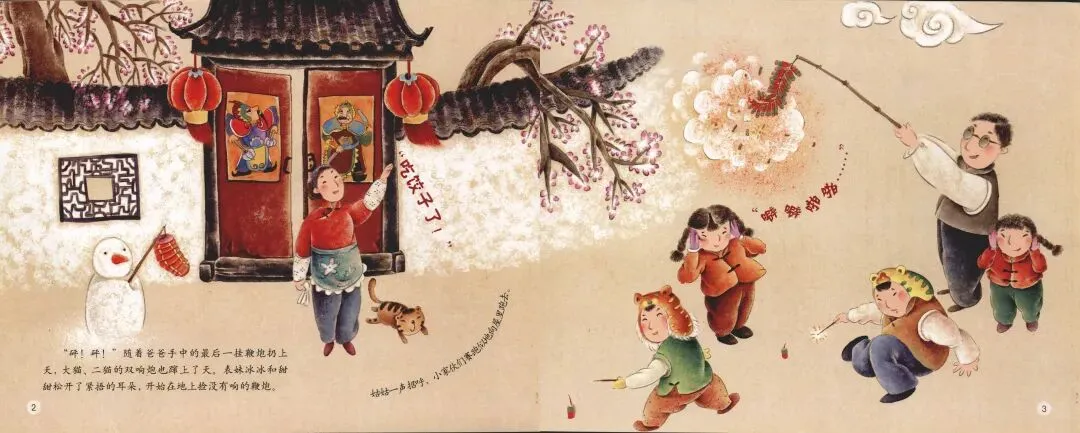
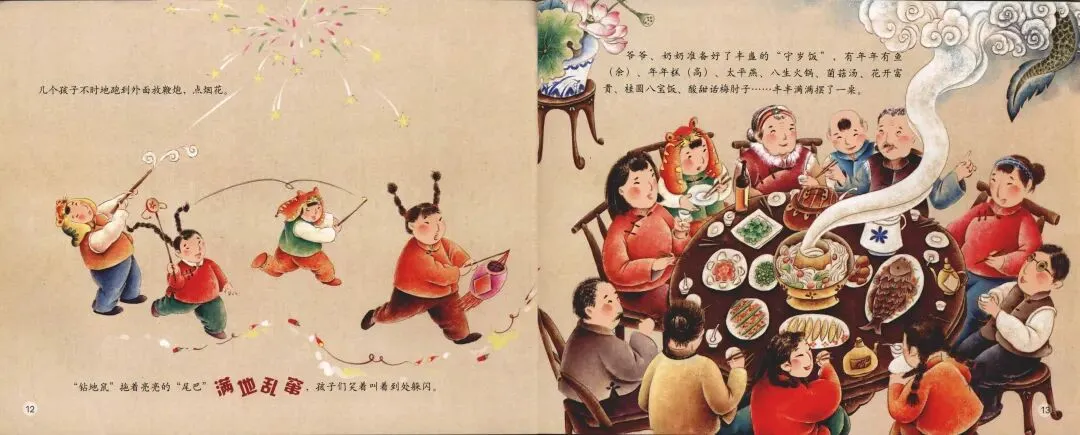
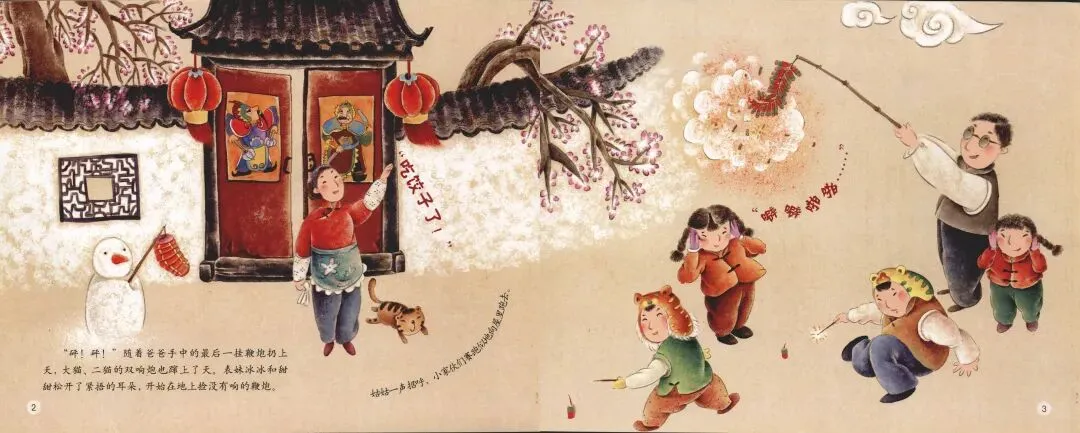
“Bang! Bang!” Just as Dad tosses the last string of firecrackers into the air, the double-bang fireworks of Big Cat and Second Cat shoot up right after, red flashes flickering in the dusk. The children clamp their hands tightly over their ears at first; once the noise fades, they can’t help bending down to rummage around for firecrackers that didn’t go off, their eyes shining like little lightbulbs. The New Year hasn’t even entered the house yet, but joy is already racing around the courtyard. Only when Aunt calls out loudly, “Time for dumplings!” do the little ones dash indoors as if in a race.
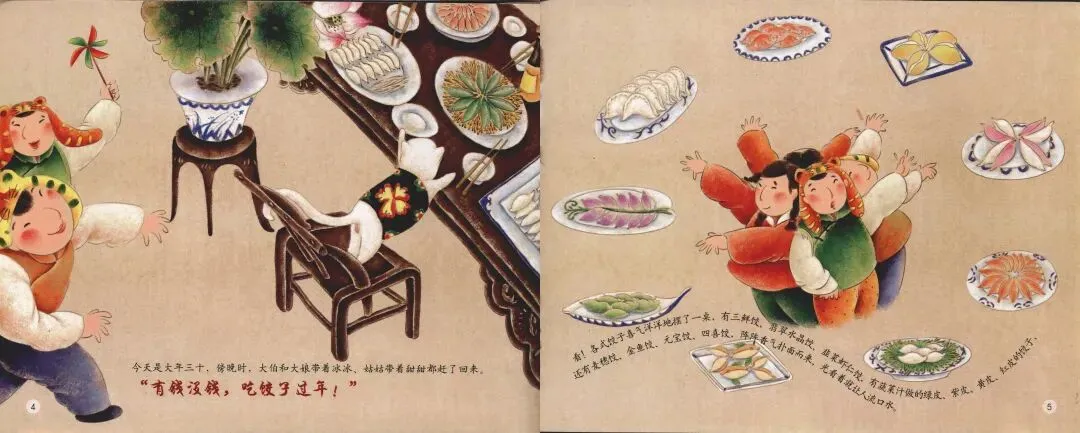
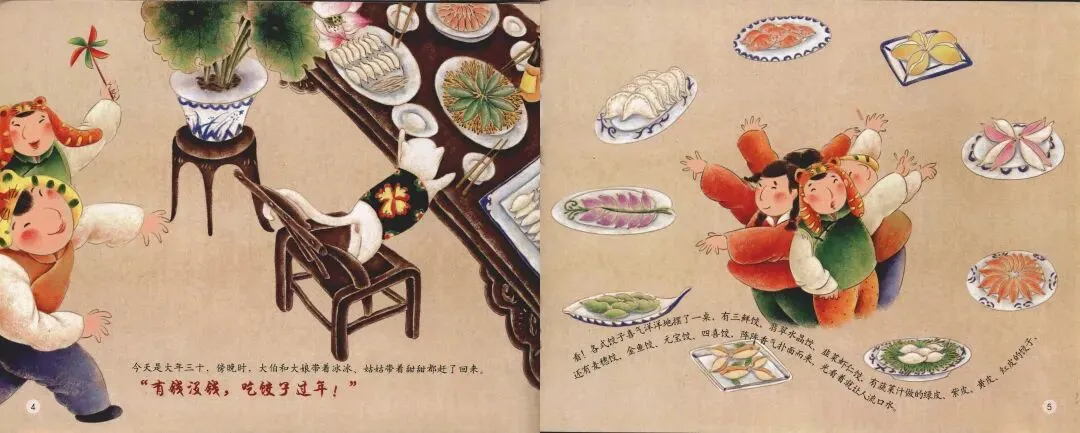
Today is New Year’s Eve. The whole family gathers to eat dumplings and welcome the New Year. Look! Plates of freshly boiled dumplings are set out on the table: jade-and-crystal dumplings, translucent as polished stone; chive-and-shrimp dumplings, green and brimming with freshness; golden fish puffing their bellies as they “swim” across porcelain plates; plump ingots nestled in red-rimmed bowls; wheat-ear dumplings lined up neatly, like harvested crops in autumn, heavy with happiness. At this moment, the Spring Festival is no longer on the calendar—it is at the tip of the nose, in the stomach, beneath the eaves.
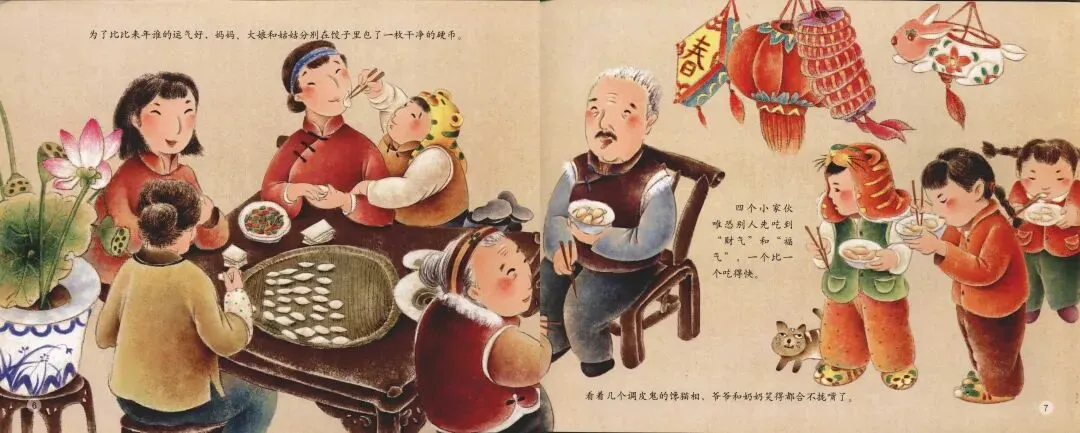
To see who will have the best luck in the coming year, Mom, Auntie, and Great Aunt each tuck a clean coin into some of the dumplings. The four little ones, afraid someone else might get the “fortune” or the “blessing” first, eat faster than one another. Watching these mischievous little gluttons, Grandpa and Grandma laugh until their mouths won’t close. Turning good luck into something that can be “eaten,” making hope tangible and within reach—this is the playful, childlike sense of ritual in the Chinese New Year.
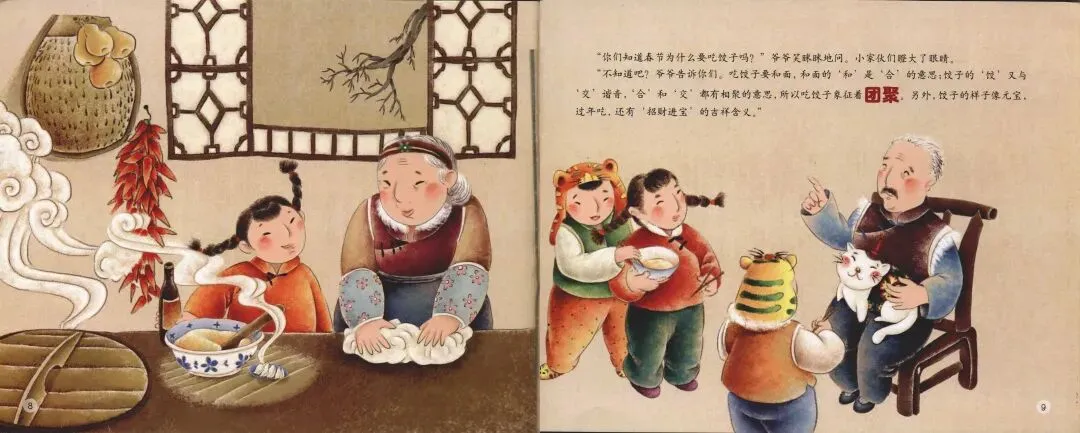
With a smile, Grandpa begins to explain why people eat dumplings during the Spring Festival: making dumplings requires kneading dough, and the word “he”(knead) sounds like “he”(together); the word “jiao”in dumpling is a homophone of “jiao”(to meet or intersect). Both “together” and “intersect” carry the meaning of reunion, so eating dumplings symbolizes togetherness. Moreover, dumplings are shaped like ancient gold ingots, so eating them at New Year also carries the auspicious wish of “welcoming wealth and treasure.” It turns out that dumplings contain the wisdom of the Chinese language and cultural genes refined over thousands of years. When we eat dumplings, what we consume is far more than filling—it is the “coming together” of shared bloodlines, the “meeting” of hearts across distances.
Grandpa and Grandma prepare a lavish “staying-up feast”: fish for abundance year after year, rice cakes for rising higher each year, Taiping swallow dumplings, an eight-ingredient hotpot, mushroom soup, “flowers blooming bring prosperity,” longan eight-treasure rice, sweet-and-sour plum-braised pork knuckle… The table is filled to overflowing.
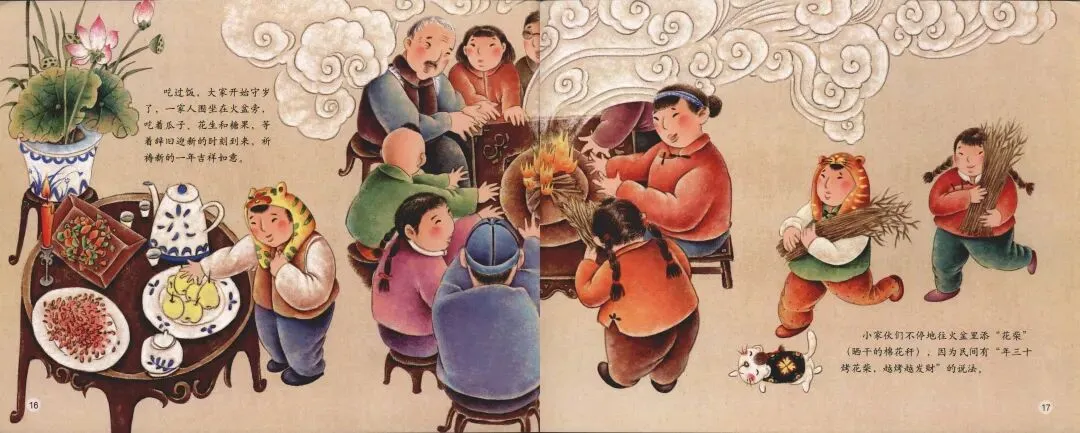
After the meal, everyone begins to stay up for the New Year. The family sits around the brazier, cracking melon seeds softly, laughter flowing in low murmurs. The children toss handfuls of “flower firewood” (dried cotton stalks) into the flames. Folk sayings go, “Roast flower firewood on New Year’s Eve—the more you roast, the richer you’ll be.”
The cotton stalks crackle in the fire, as if whispering secrets. Flames leap and dance, illuminating the wrinkles on the elders’ faces and lighting up the curiosity in the children’s eyes. At this moment, past and future converge, death and rebirth enter into dialogue. As Emperor Taizong of Tang, Li Shimin, once sighed in his “Poem on Staying Up for the New Year”: “Together we rejoice in the old and the new, welcoming and sending off within a single night.” A thousand years later, in this small rural courtyard, the same emotions continue—this is a gentle negotiation between humanity and nature, between people and time.
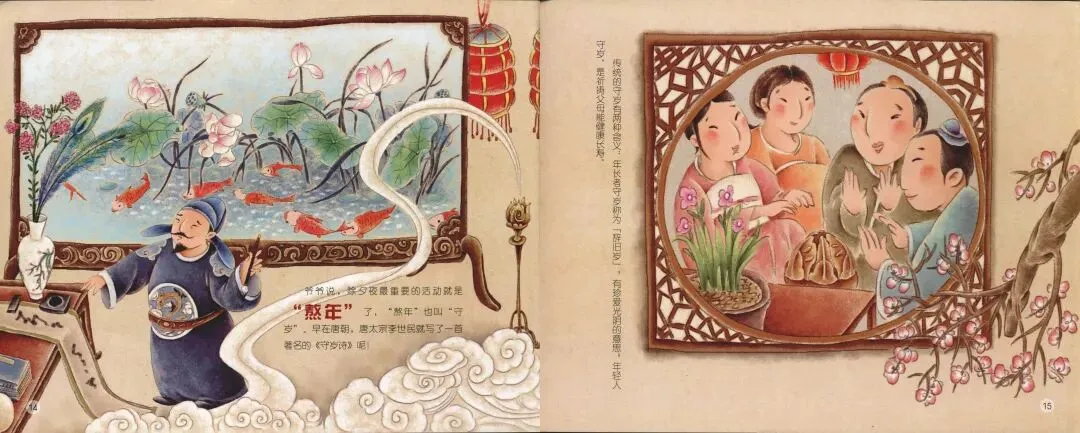
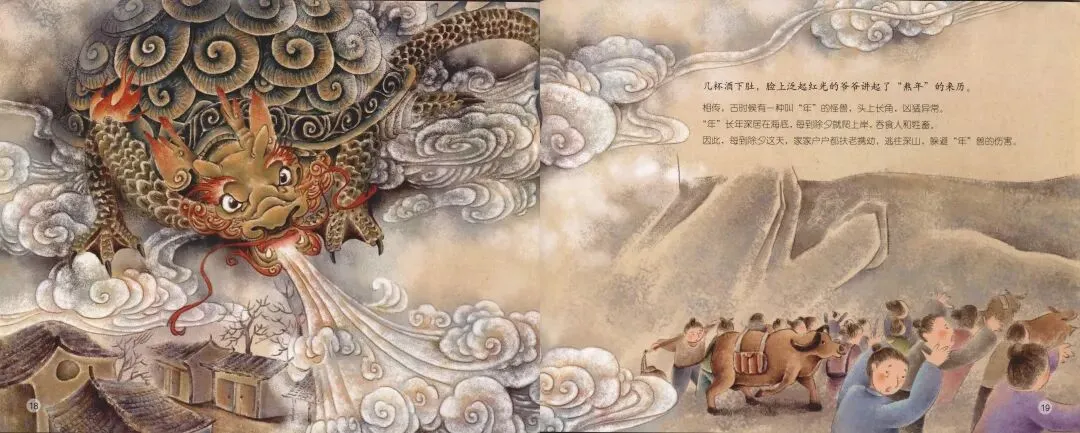
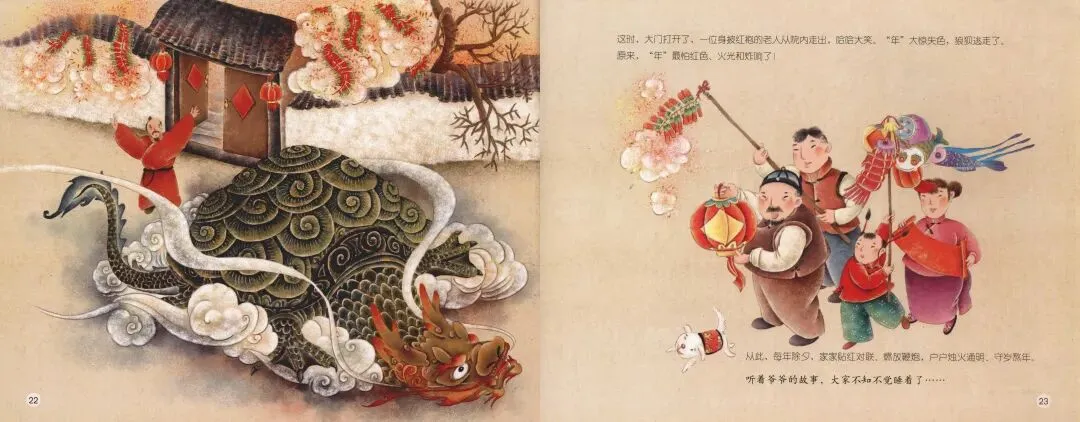
After a few cups of wine, Grandpa’s face flushed red as he tells the story of “enduring the year.” In that moment, reality and myth quietly intertwine. The horned, ferocious “Nian” beast was in fact a psychological projection of ancient people confronting unknown disasters—it could be plague, war, famine, or any terrifying “abnormality.” Red couplets, the crackle of firecrackers, and brightly lit candles were humanity’s symbolic wisdom for overcoming fear. Listening to Grandpa’s story, everyone drifts off to sleep without even realizing it…
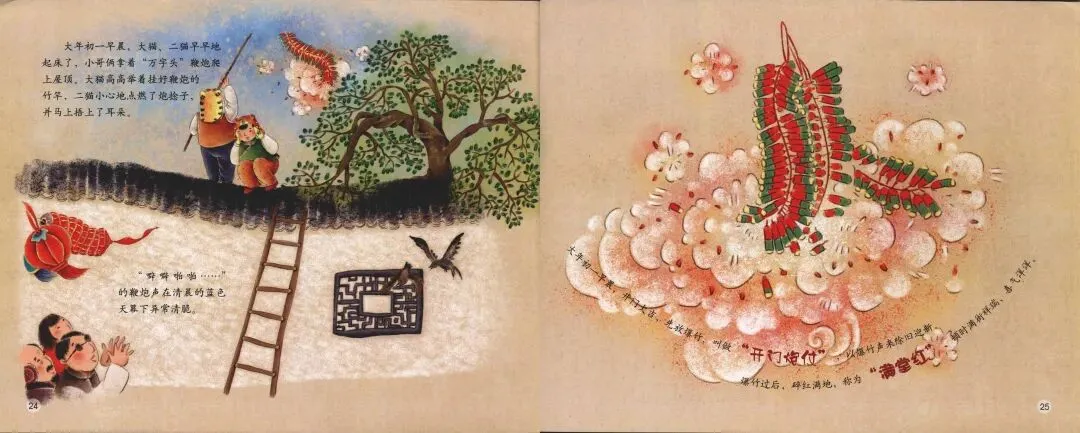
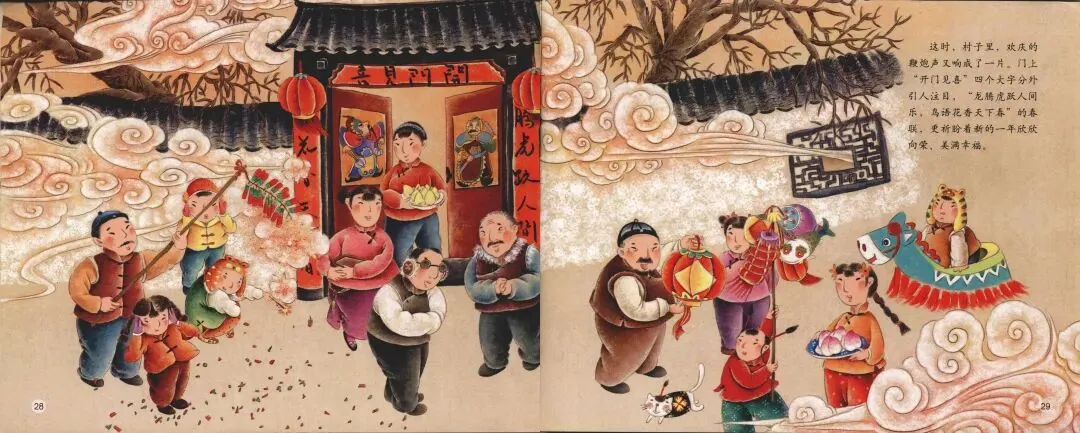
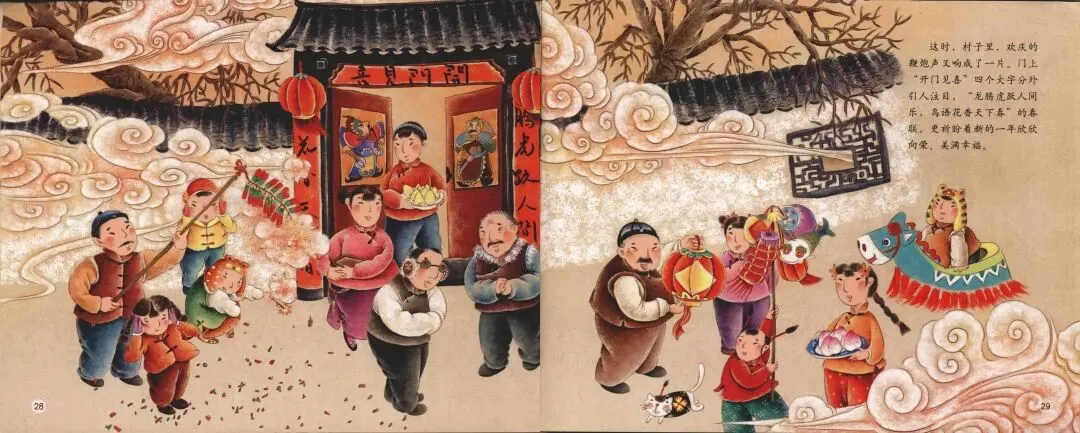
On the morning of the first day of the New Year, firecrackers explode on the rooftops. Endless chains of “wan-head” firecrackers sound off—known as the “opening-the-door firecrackers.” Red paper fragments carpet the ground, called “a hall full of red.” This scene is the emotional climax of the entire book and the opening of hope. The “opening-the-door firecrackers” are not merely noise and festivity; they are a declaration: the gloom of the old year has been driven away, and the sunlight of the new year is spilling across the world.
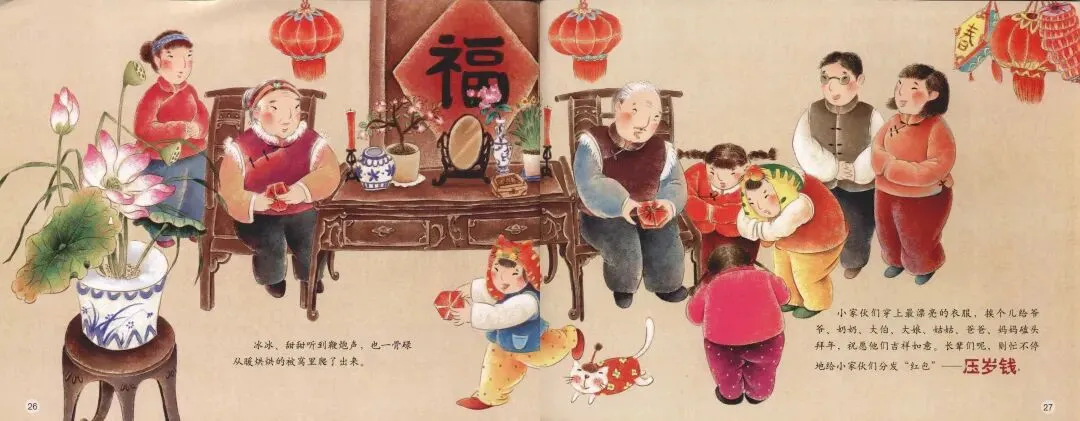
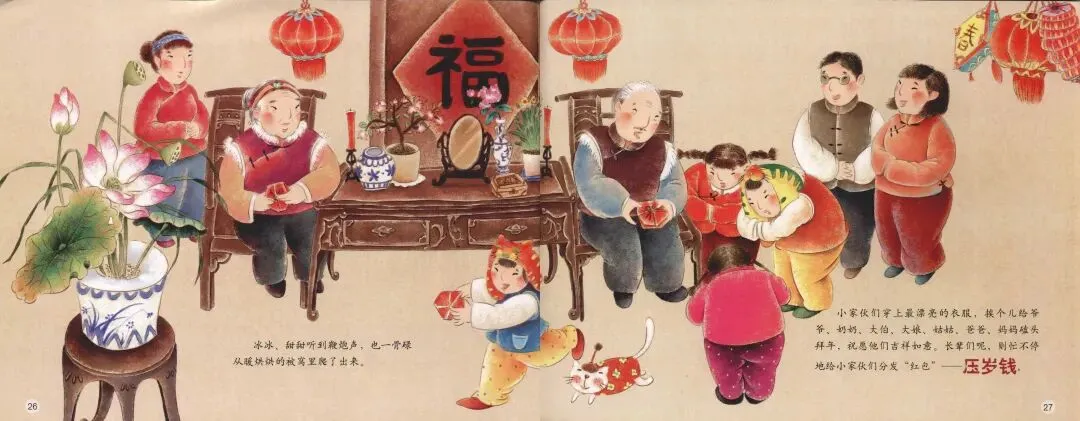
The children put on new clothes, kneel to offer New Year greetings, and receive “yasui”money from their elders. “Yasui”originally meant “warding off evil.” The plump red envelopes are placed under pillows, said to suppress nightmares and protect a child’s dreams. Within these red envelopes, elders pass on weighty blessings and guardianship. In this moment, ritual, blessing, and love intertwine, forming one of the core spiritual images of the Spring Festival.
And in the village, amid a chorus of firecrackers, a pair of Spring Festival couplets hangs high at the entrance:“Dragons leap and tigers bound, joy fills the human world;Birdsong and blooming flowers, spring across the land.”The characters are ink-black, the paper bright red; when the wind blows, it seems ready to usher the whole of spring through the gate. This is not merely poetry, but a nation’s eternal yearning for a good life.
Within this slim picture book, there is no grand narrative and no didactic slogans. There is only a wisp of steam by the stove, a cluster of sparks in the brazier, a drop of oil glistening at the corner of a child’s mouth. There is the surprise of biting into a coin with a “crunch”while eating dumplings, the warmth melting into roasted flower firewood during the long vigil, the joy of gazing at fireworks blooming in the New Year’s Eve sky… The book tells us that tradition is not a cold exhibit in a museum, but an emotional memory passed down from generation to generation. It is precisely these dust-like, fleeting moments that weave the thickest and richest “New Year” in our hearts.
The most moving quality of this picture book lies exactly in these small yet authentic scenes. It does not teach people “what the Spring Festival is,” but instead makes us remember—so this is what celebrating the New Year is like: there are sounds, there is warmth, there are people waiting for you to come home, and lights lit just for you. When such images are remembered by children, the Spring Festival becomes not merely a tradition, but a place of belonging in the heart. No matter how far one may travel in the future, as long as one recalls this plate of dumplings, this brazier, this ground full of red paper scraps, one knows—the New Year has always been there.
Because the true New Year is not on the calendar, but wherever warm lights are close at hand. Because it has never been just a date, but a journey home—back to childhood, back to one’s hometown, back to the side of loved ones, to reenact that never-ending reunion deep within memory; and to feel, amid countless lights like stars and years as gentle as poetry, the warmth of a nation.
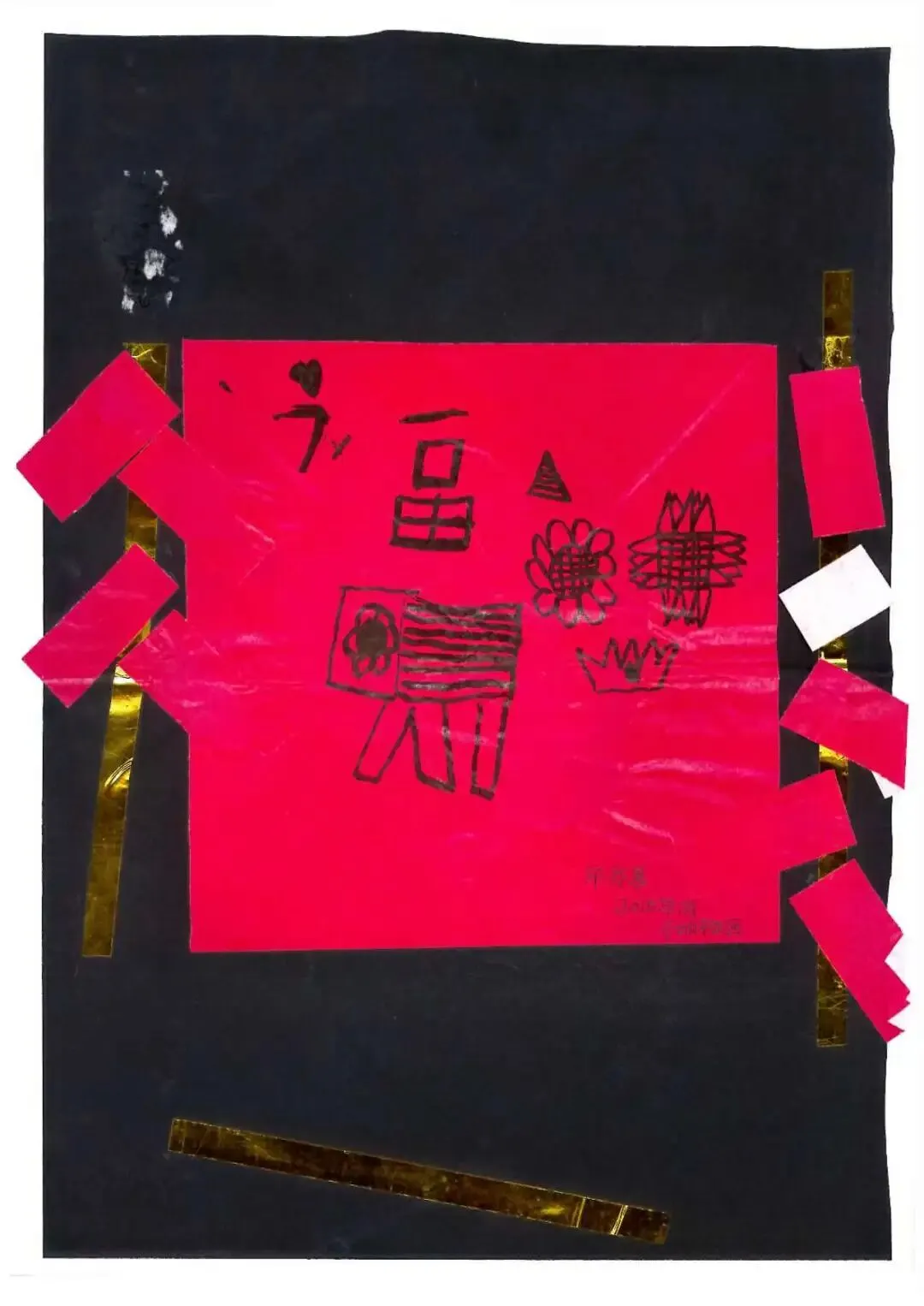
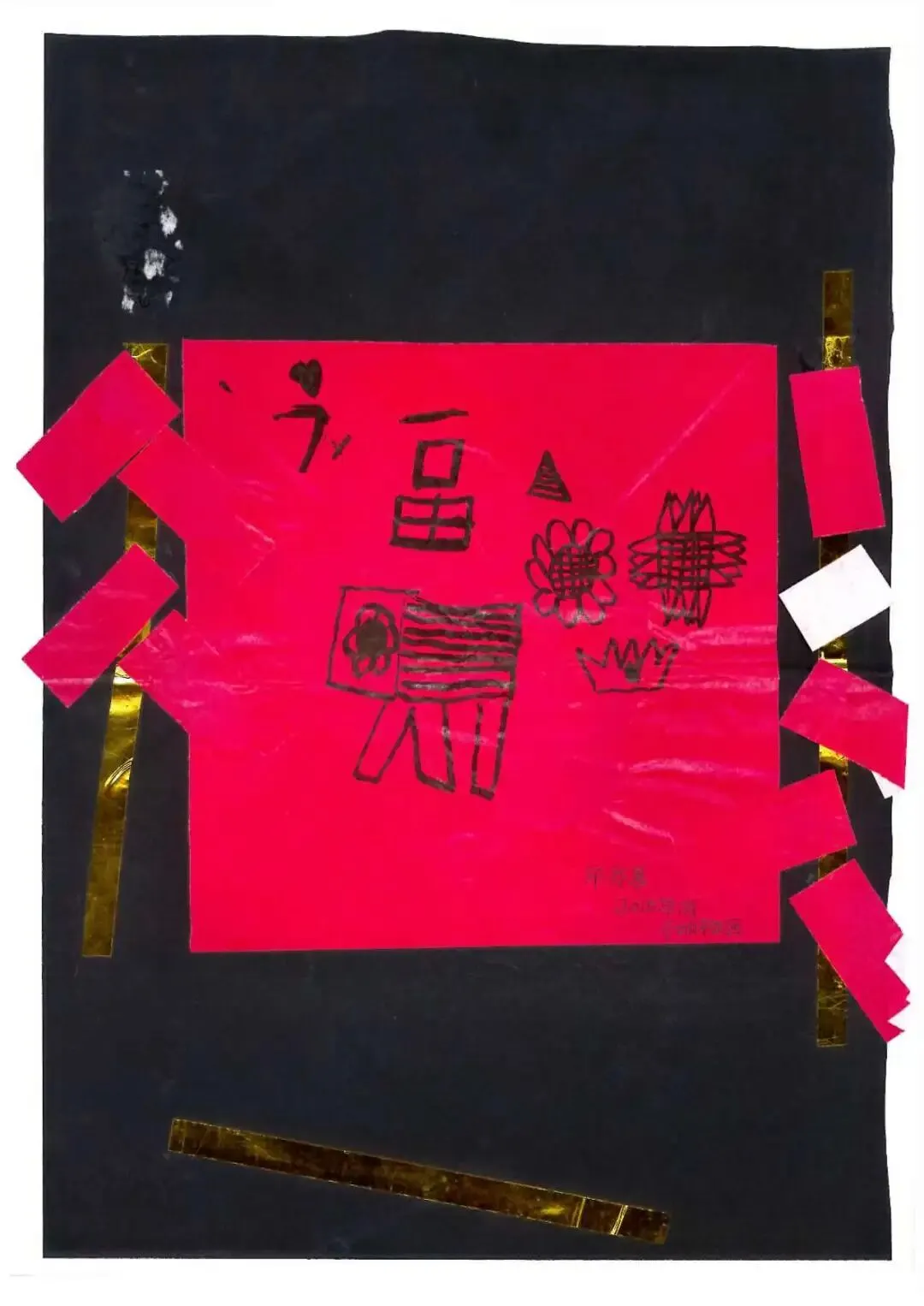
Appendix:In January 2015, during the New Year, the “fu”(good fortune) character I drew when I was just over four years old in kindergarten;
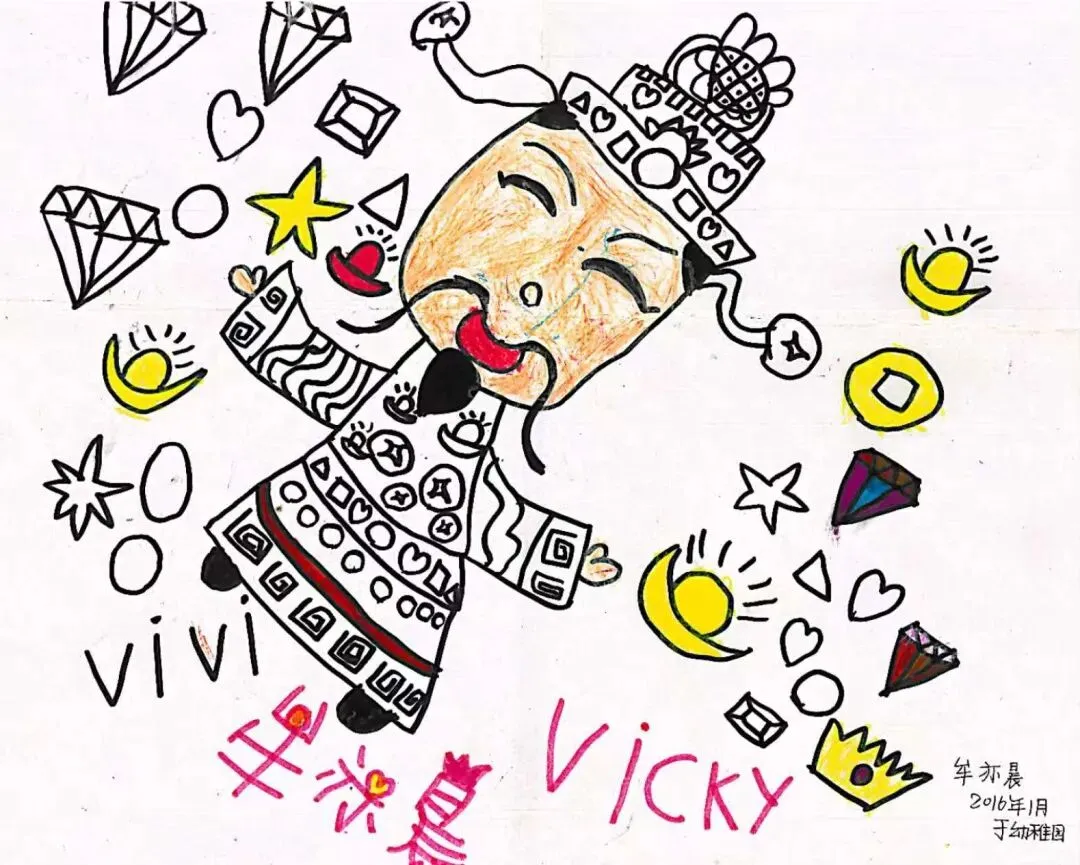
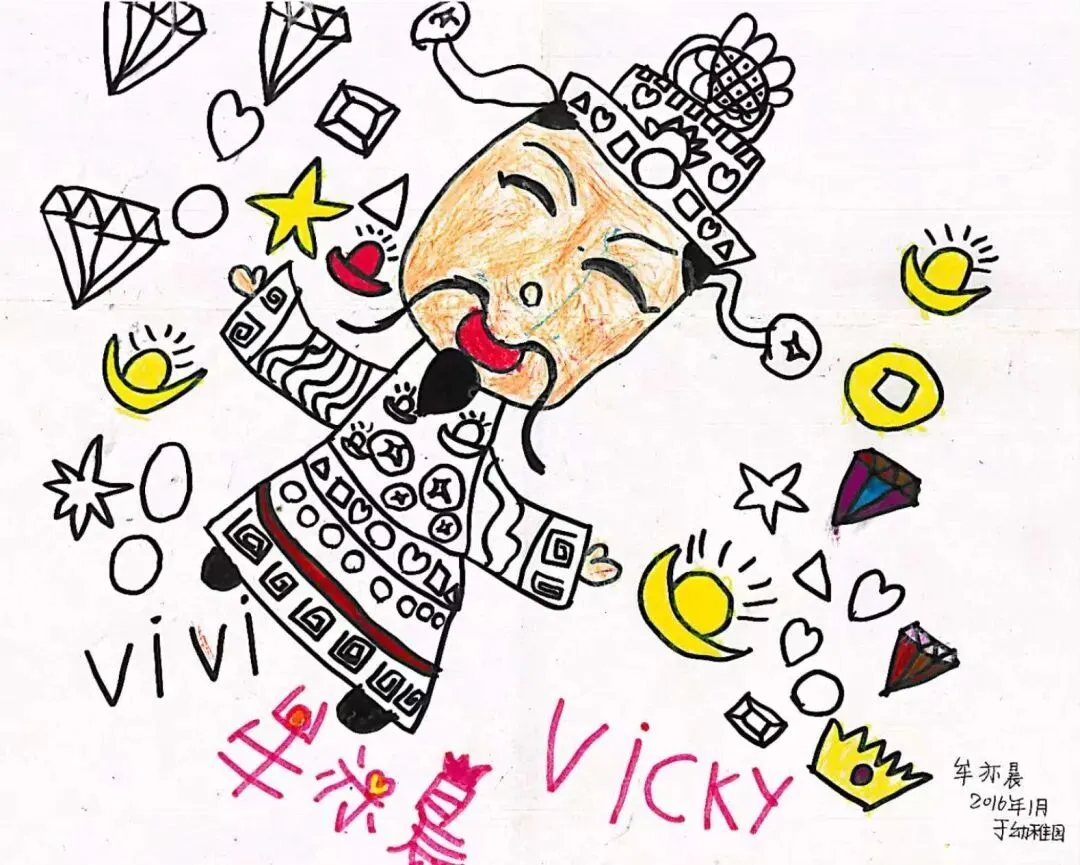
In January 2016, during the New Year, the God of Wealth I drew when I was just over five years old in kindergarten;
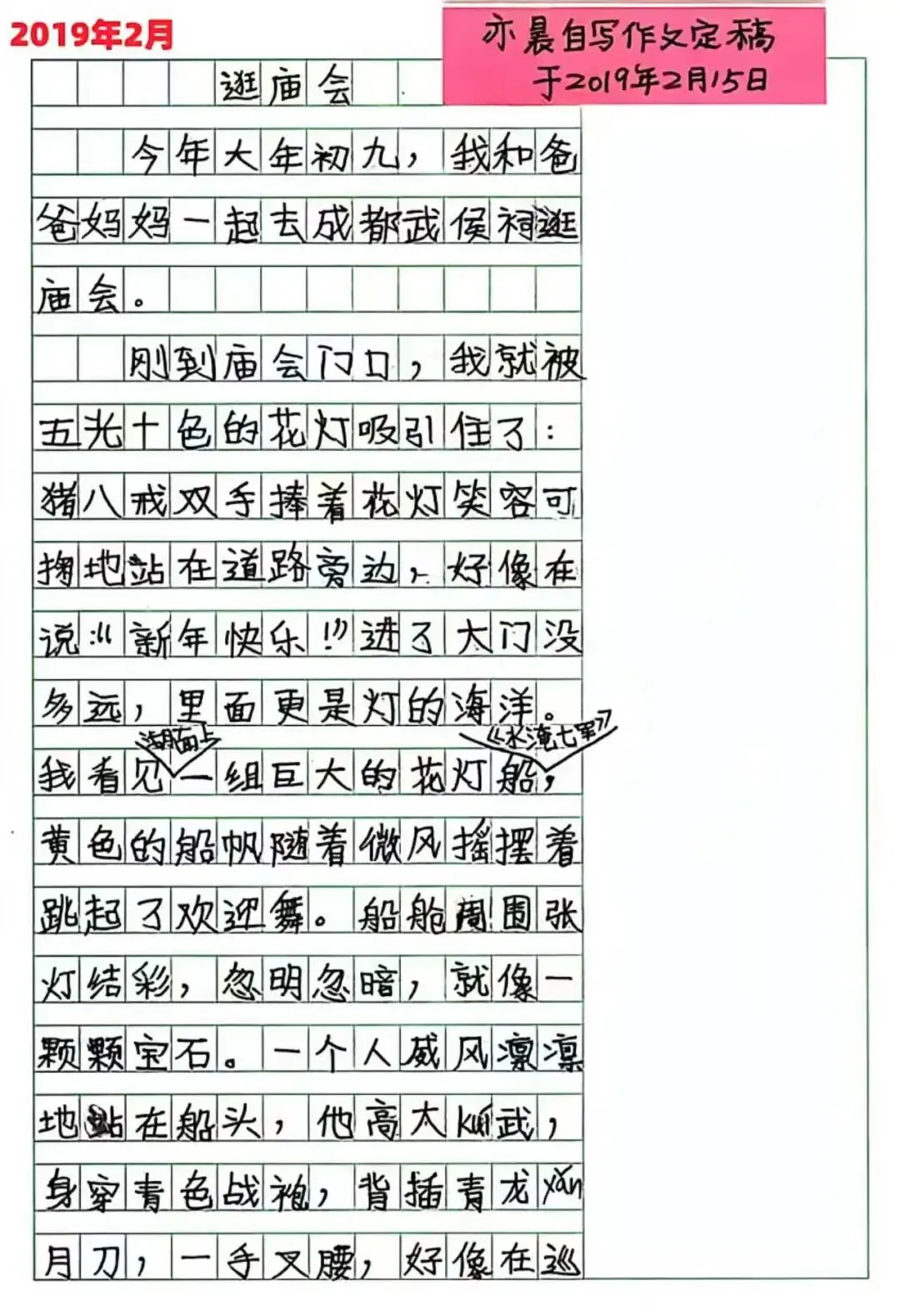
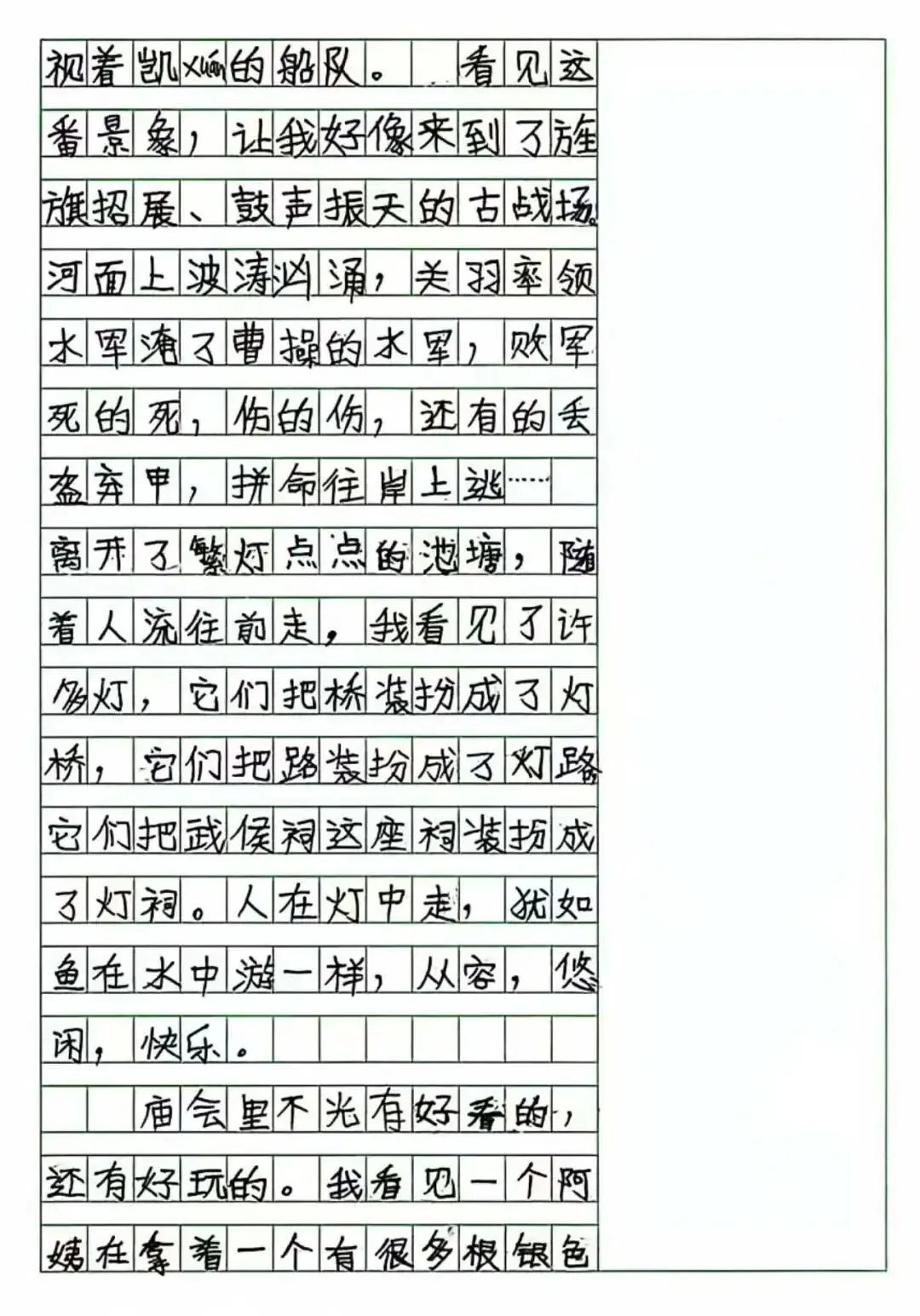
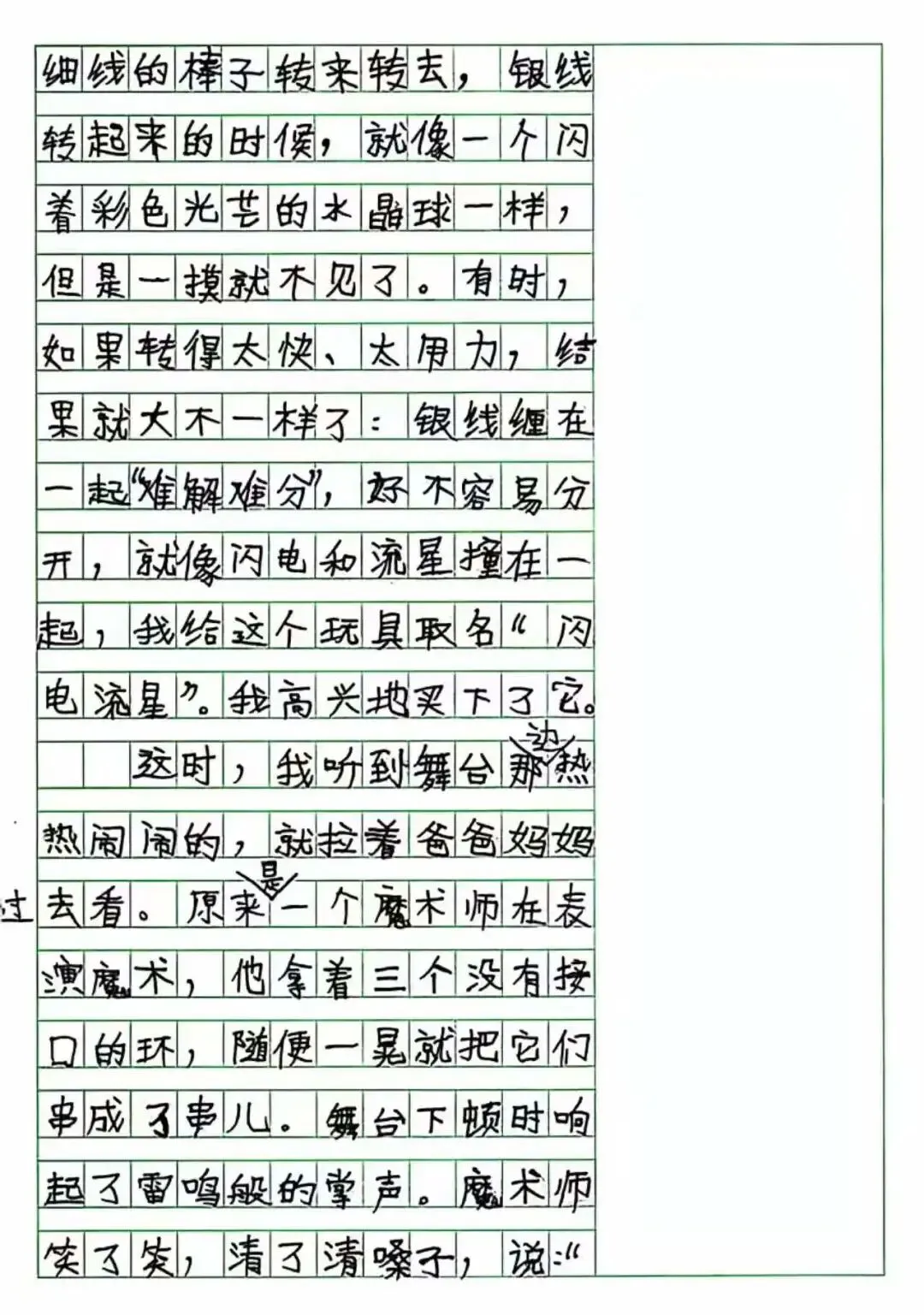
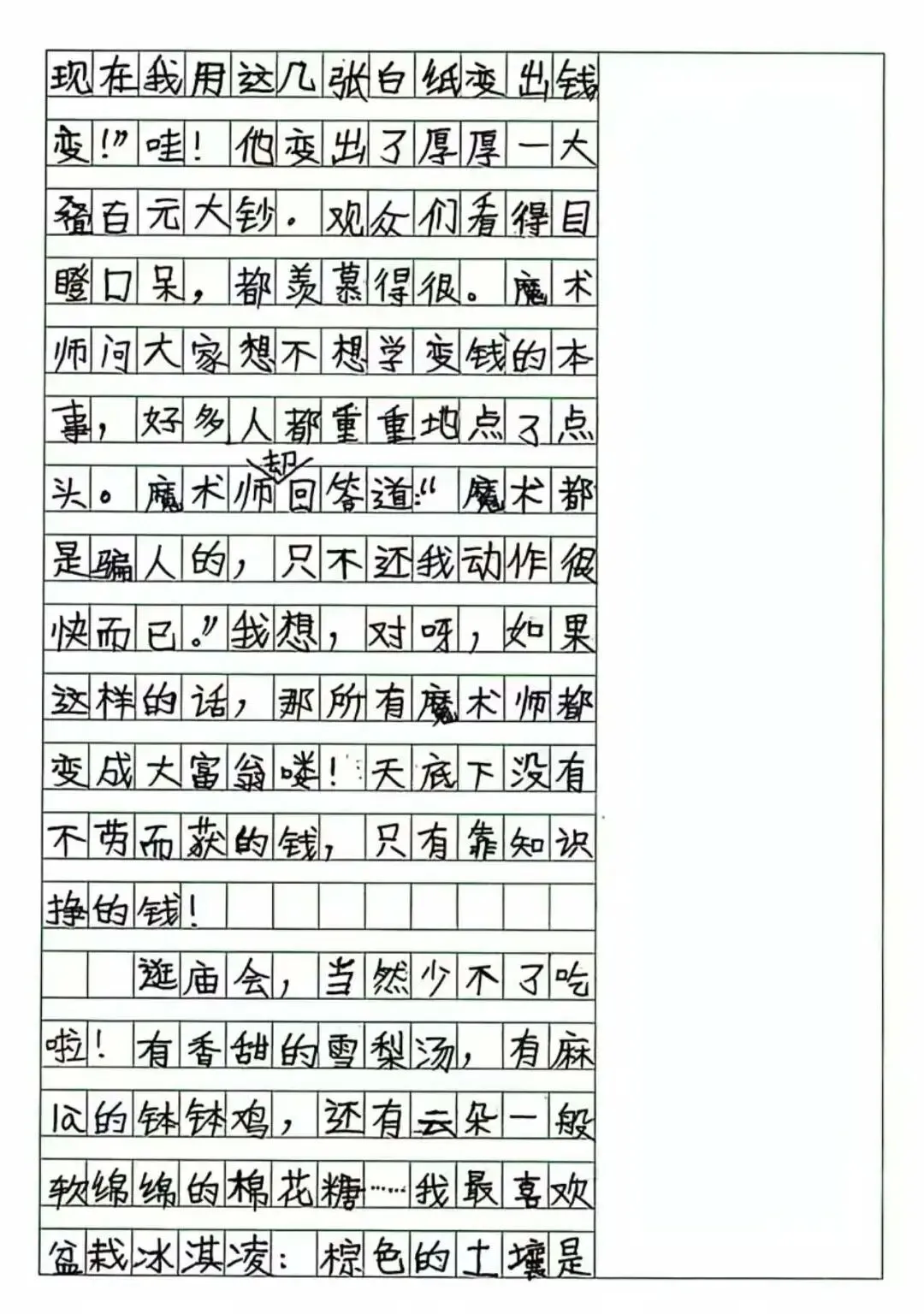
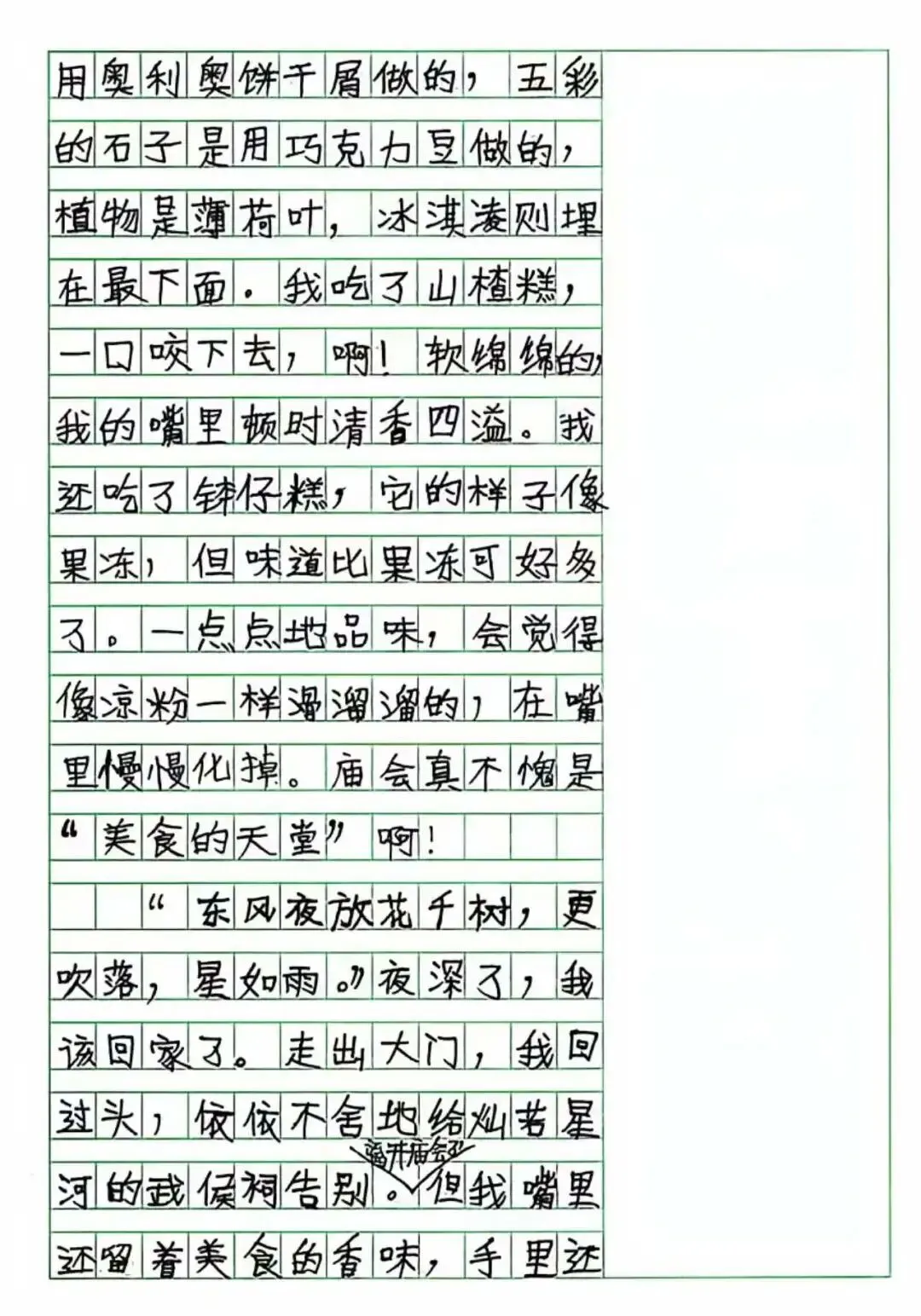
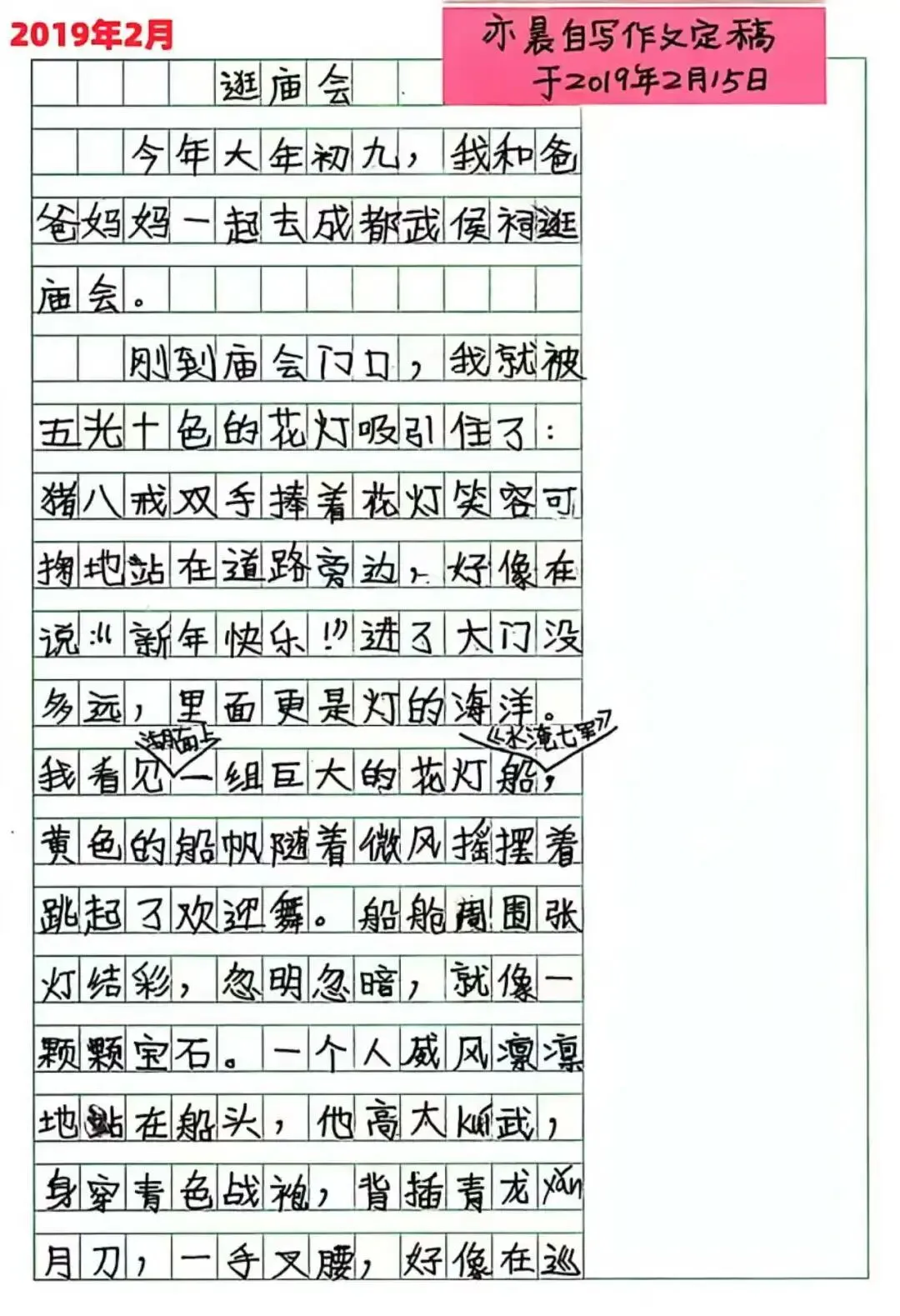
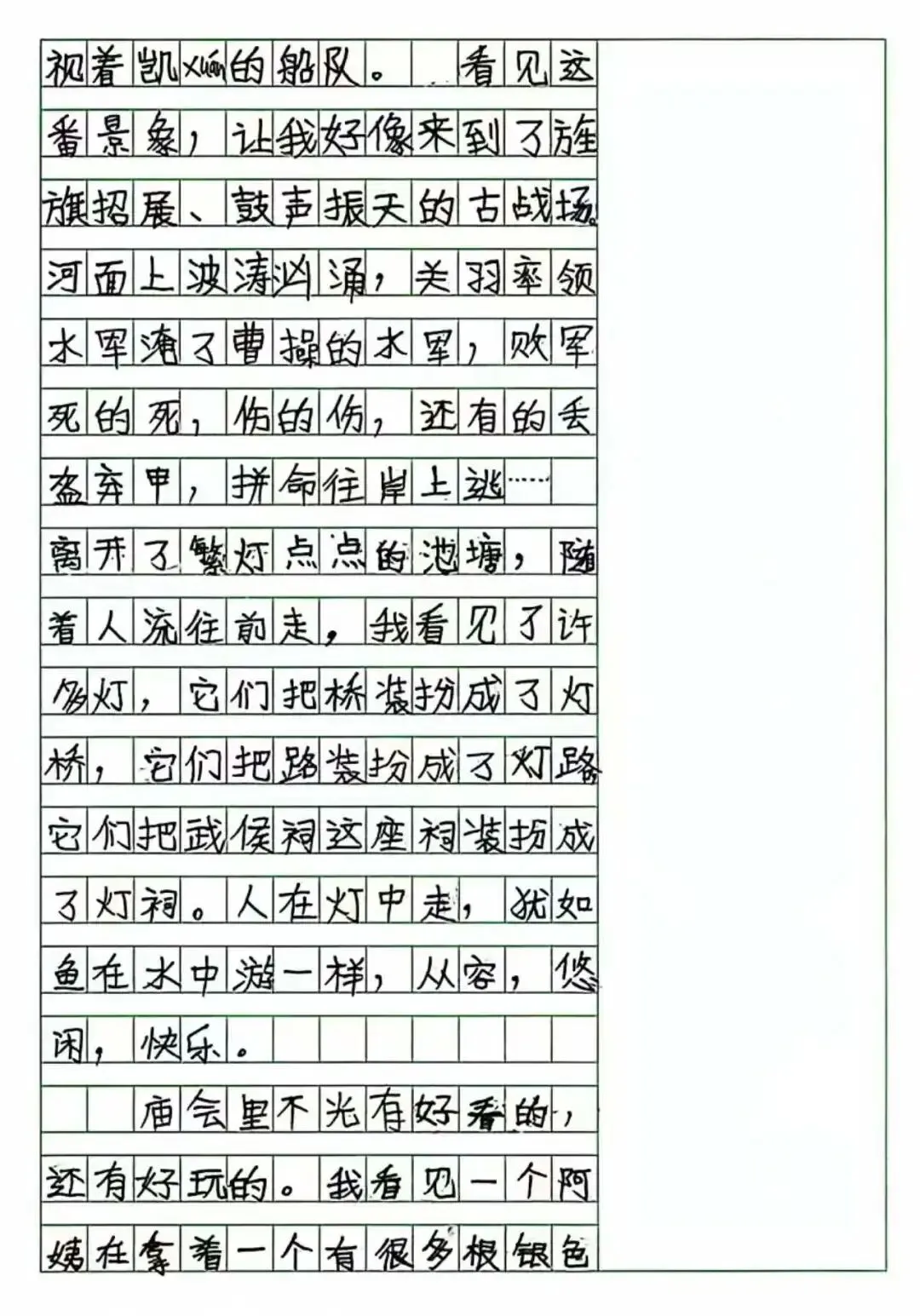
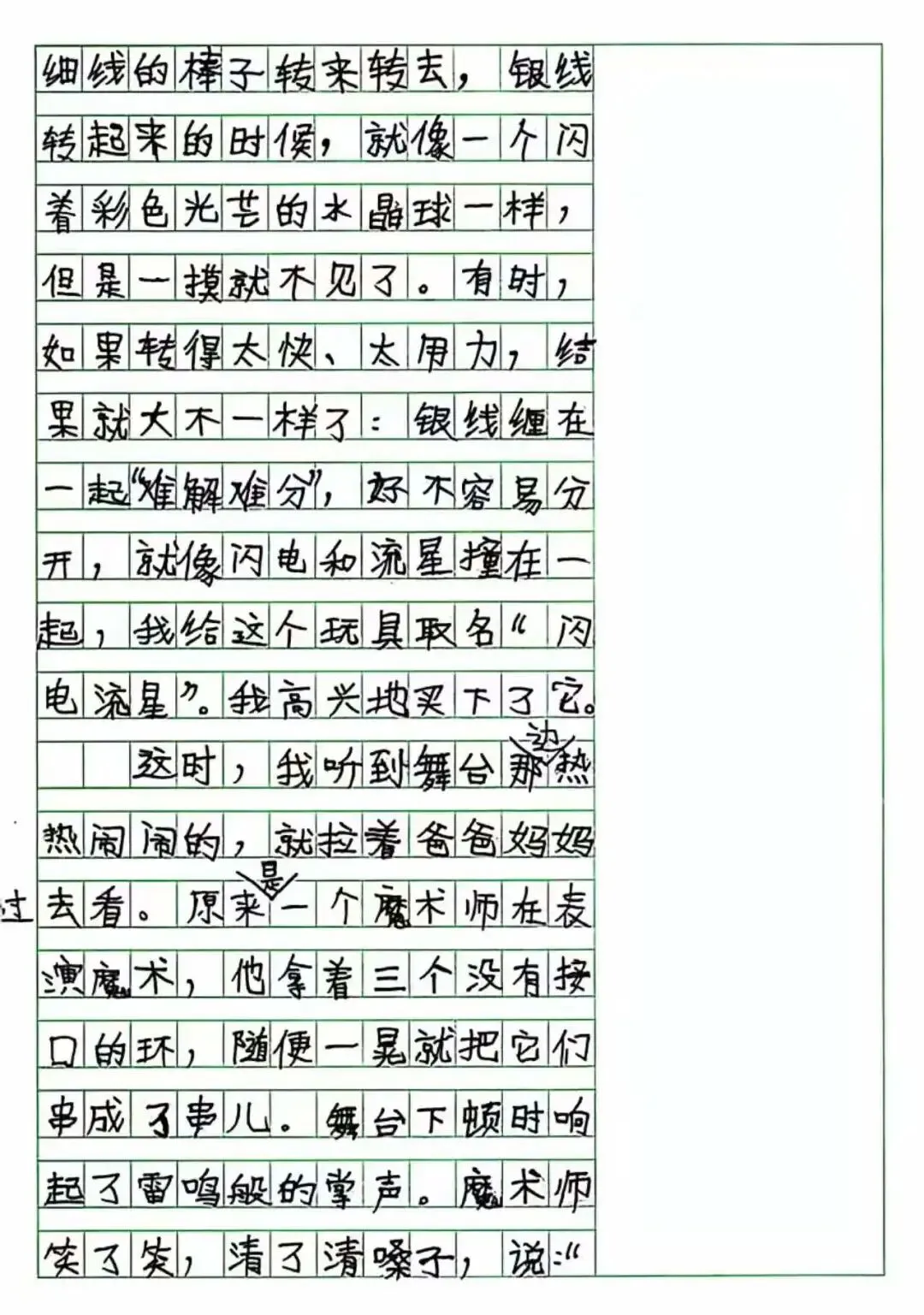
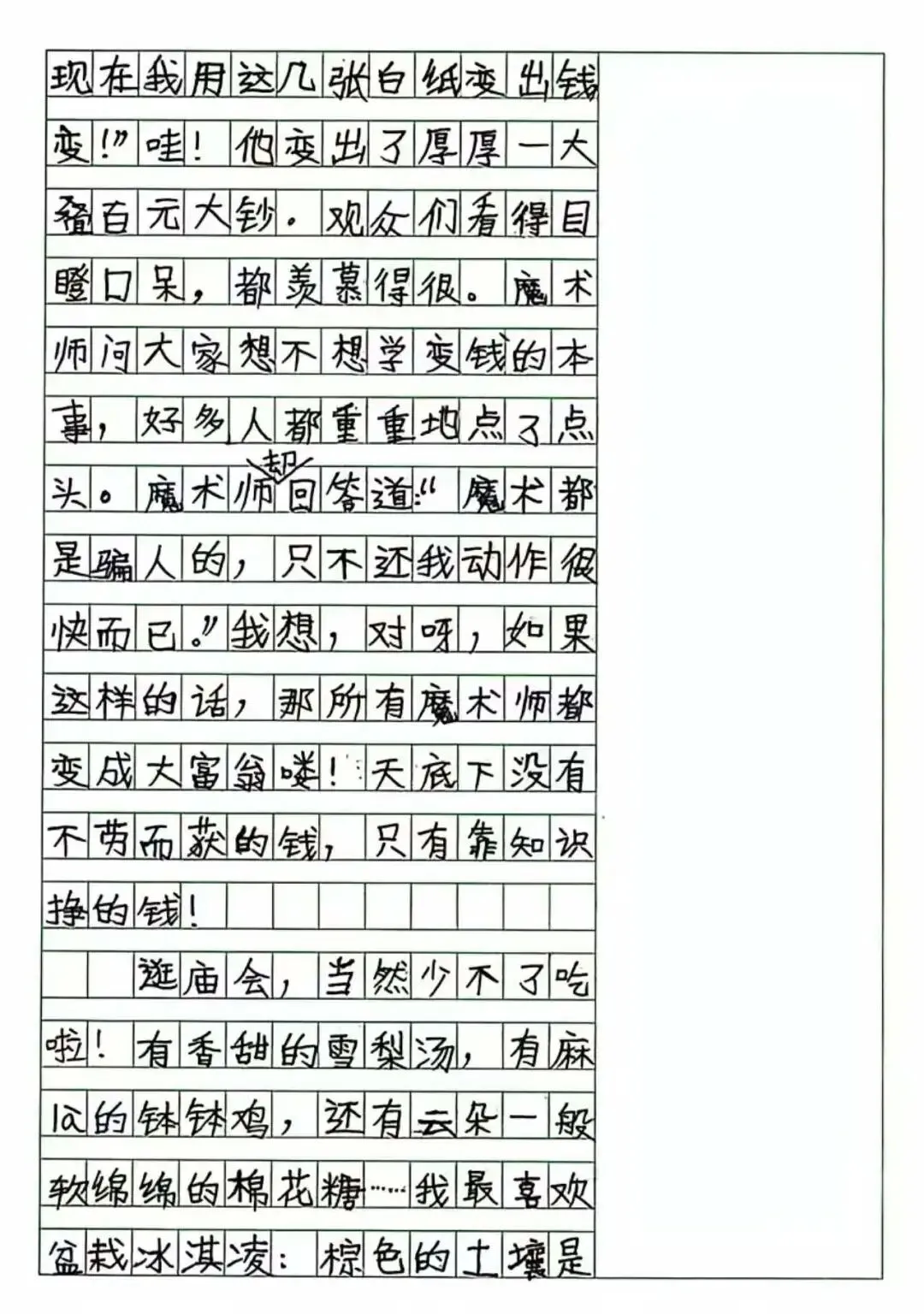
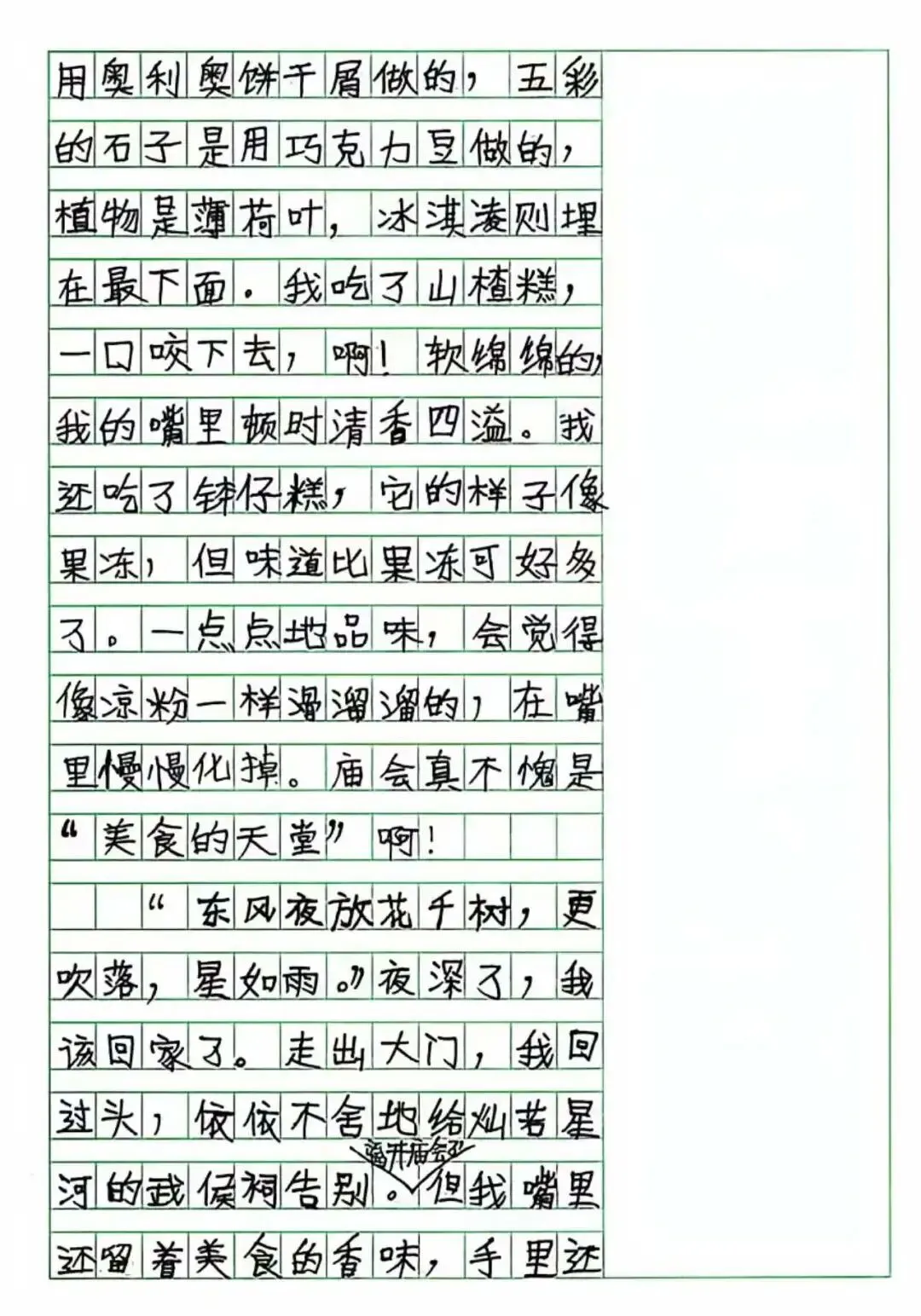
On February 15, 2019, when I was eight years old and in the third grade of primary school, I wrote the composition 《Visiting the Temple Fair》. My mother once recorded the entire process of how this piece was written: I had always loved letting my imagination run free, favoring expressive writing over strict realism. I spent a full two days struggling on my own to shape the idea, then revising it again and again under my mother’s guidance. In the process, I cried and fussed several times, broke down more than once, gave up and then persisted again—until this final draft was finally completed. When the piece was finished, I threw down my pen, hugged my mother, and cheered, wishing I could fly into the clouds like a little bird: “Mom, Mom, I never thought I could write this well!”
I still remember what my mother told me then: if a swan is raised by penguins, even with wings it will never know it can fly; conversely, if a penguin is raised by swans, it will only resent its wings for being too small, never realizing that it is a master swimmer. My parents will help me—waiting with me through the slow growth of life, opening one door after another that leads to beauty. But whether I am a swan or a penguin, I must spread my own wings and clear my own path. Today, at fifteen, I know this: reading and writing are the road to beauty that I will walk with determination.

灯火可亲,年味如歌——原创绘本《春节——辞旧迎新过大年》里的民族温度
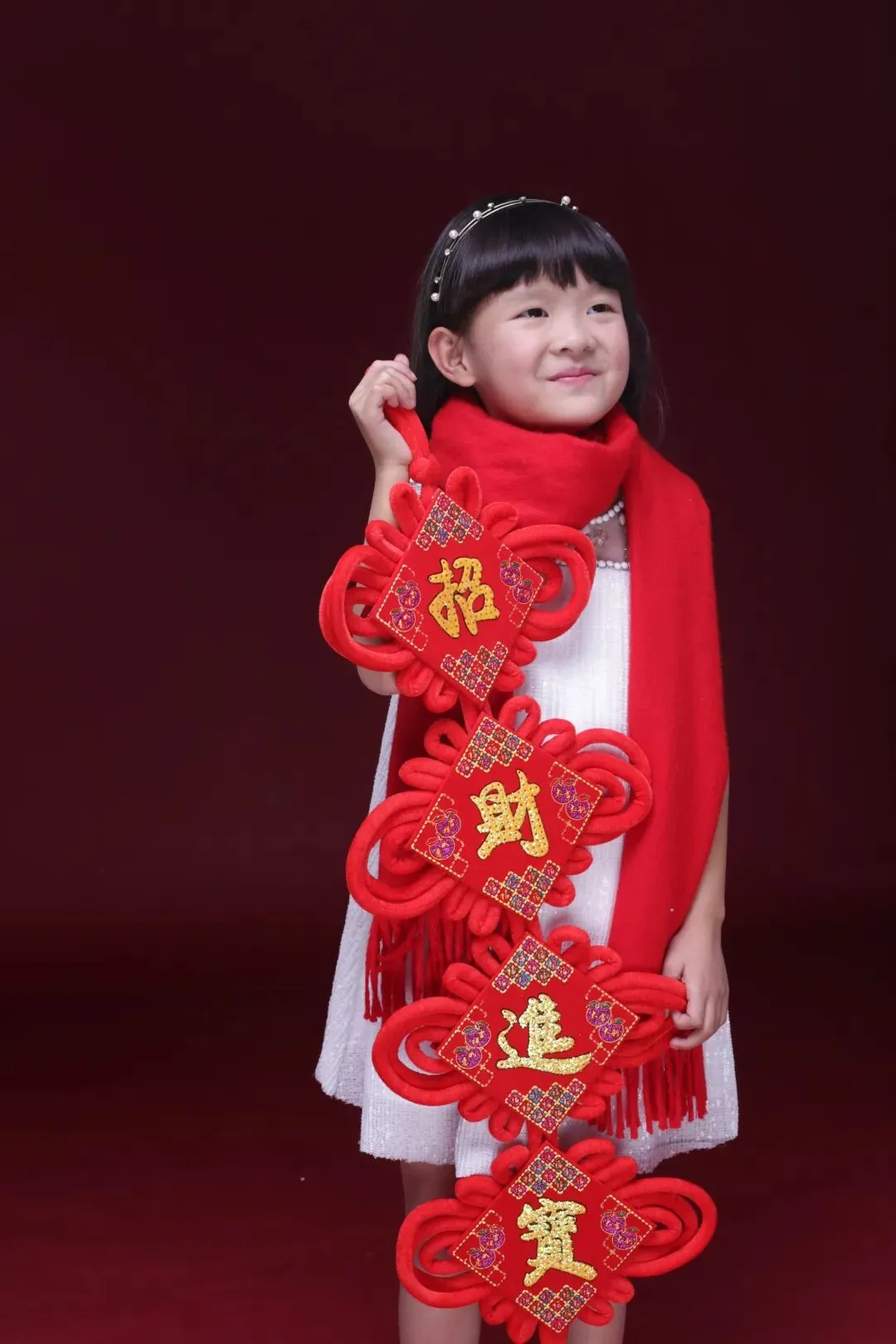
当第一声“砰!砰!”的爆竹声划破冬夜的寂静,当四溢的饺子香氤氲满屋,童年的年味便如春潮般涌来。在原创绘本《春节——辞旧迎新过大年》中,作者将一个平凡却深情的大年三十娓娓道来,在烟火、饺子、笑声与祖孙对话中织就了一幅民俗长卷;也让我们在这本小小的图画书中,得以窥见中华文明最柔软也最坚韧的文化根脉——那是时光褶皱里藏着的民族温度。
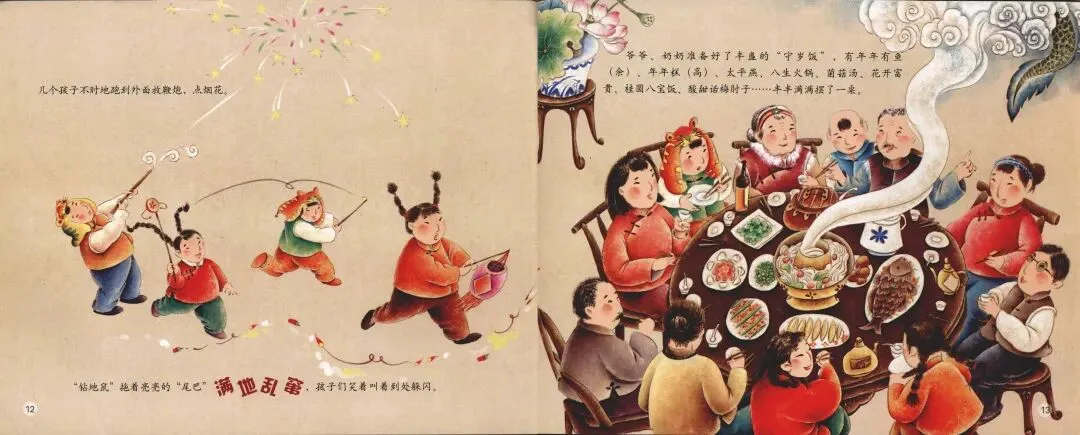
“砰!砰!”爸爸刚把最后一挂鞭炮抛上天,大猫、二猫的双响炮紧跟着窜起,红光在暮色里一闪一闪。孩子们先是死死捂住耳朵,等声音落下,又忍不住弯腰在地上翻找没响的鞭炮,眼睛亮得像小灯泡。年,还没进屋,喜气已经满院子跑了。直到姑姑大声招呼“吃饺子了!”,小家伙们才赛跑似地向屋里跑去。
今天是大年三十,全家人都聚在一起吃饺子过年。看!一盘盘刚出锅的饺子摆在桌上:翡翠水晶饺透亮如玉;韭菜虾仁饺绿得冒鲜;还有金鱼鼓着肚皮游在瓷盘里,元宝胖乎乎地卧在红边碗中;麦穗饺排成一行,像是秋天收完的庄稼,沉甸甸地压着幸福。这一刻,春节不在日历上,而是在鼻尖、在胃里、在屋檐下。
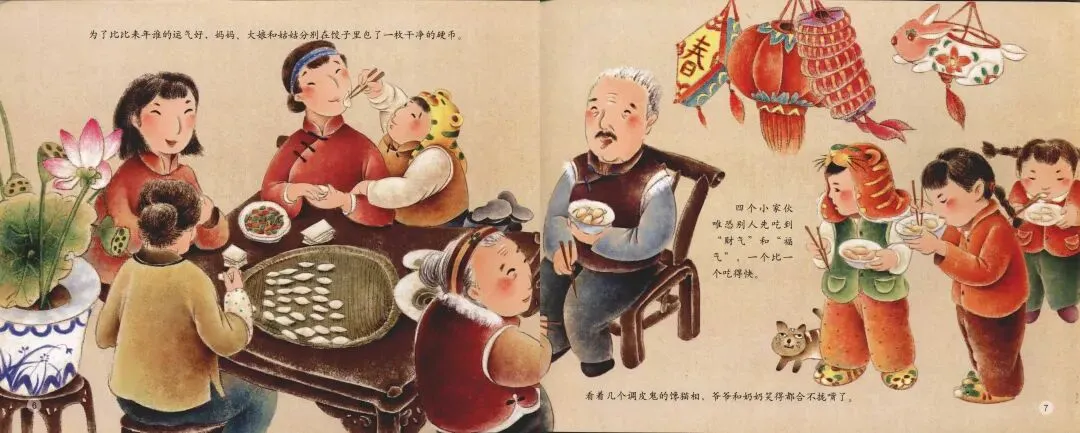
为了比比来年谁的运气好,妈妈、大娘和姑姑分别在饺子里包了一枚干净的硬币。四个小家伙唯恐别人先吃到“财气”和“福气”,一个比一个吃得快。看着几个调皮鬼的馋猫相,爷爷和奶奶笑得都合不拢嘴了。让好运变得可以被“吃到”,让希望变得具体可触——这是中国人春节里带着童真与幽默的仪式感。
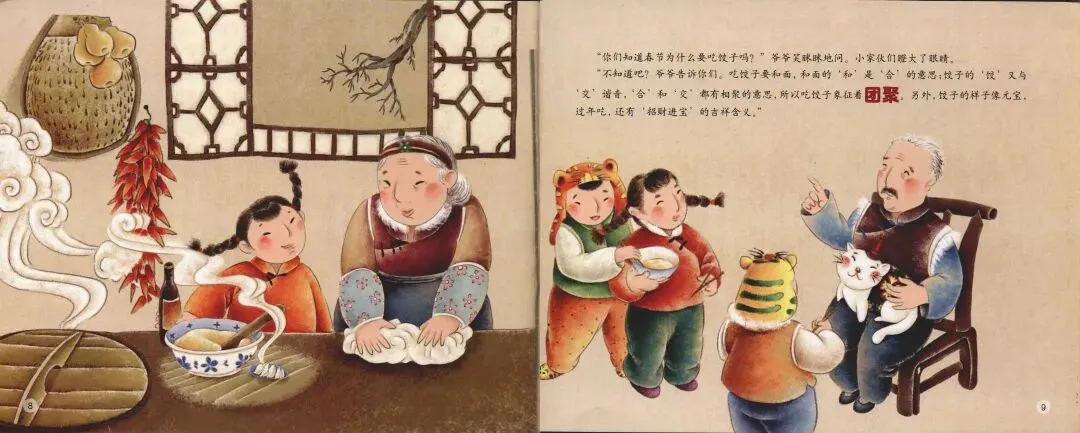
爷爷笑眯眯讲起了春节为什么要吃饺子的由来:吃饺子要和面,和面的‘和’是‘合’的意思,饺子的‘饺’又与‘交’谐音,‘合’和‘交’都有相聚的意思,所以吃饺子象征着团聚。另外,饺子的样子像元宝,过年吃,还有‘招财进宝’的吉祥含义。原来,饺子里藏着汉语的智慧与千年的文化基因。吃饺子,吃的何止是馅?那是血脉相连的“聚合”,是天涯共此时的“相交”。
爷爷、奶奶准备好了丰盛的“守岁饭”,有年年有鱼(余)、年年糕(高)、太平燕、八生火锅、菌菇汤、花开富贵、桂圆八宝饭、酸甜话梅肘子……丰丰满满摆了一桌。
吃过饭,大家开始守岁了。一家人围坐火盆旁,瓜子轻嗑,笑语低回,孩子往火里添一把“花柴”(晒干的棉花秆),民间说“年三十烤花柴,越烤越发财”。
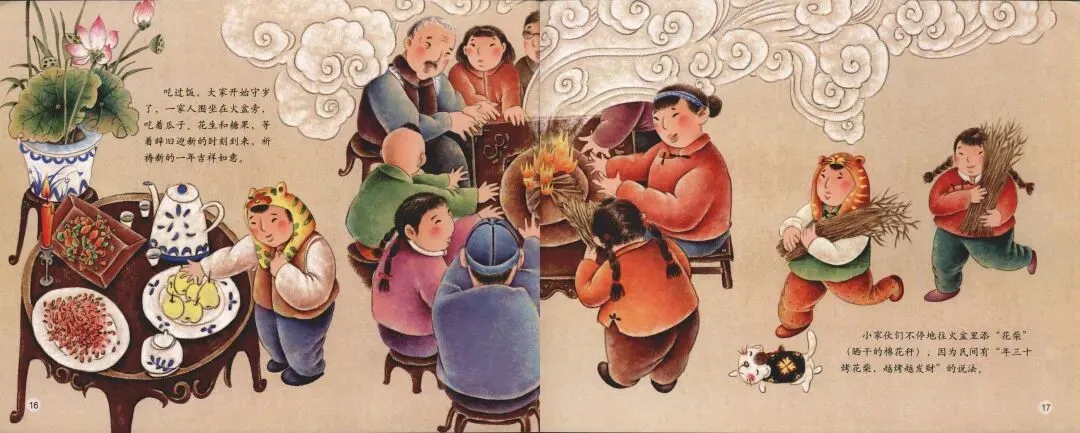
棉花秆在火里噼啪作响,像在说悄悄话。火光跳跃,映照出老人脸上的皱纹,也照亮了孩童眼中的好奇。这一刻,过去与未来在此交汇,死亡与新生在此对话。正如唐太宗李世民在《守岁诗》中所叹:“共欢新故岁,迎送一宵中。”千年之后,在这个小小的农家院落里,同样的情感仍在延续——这是人与自然、人与岁月之间的温柔协商。
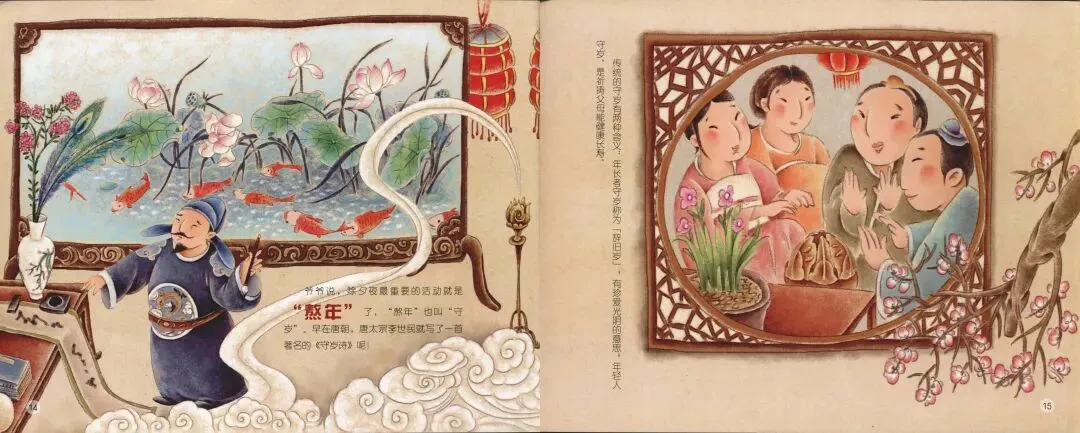
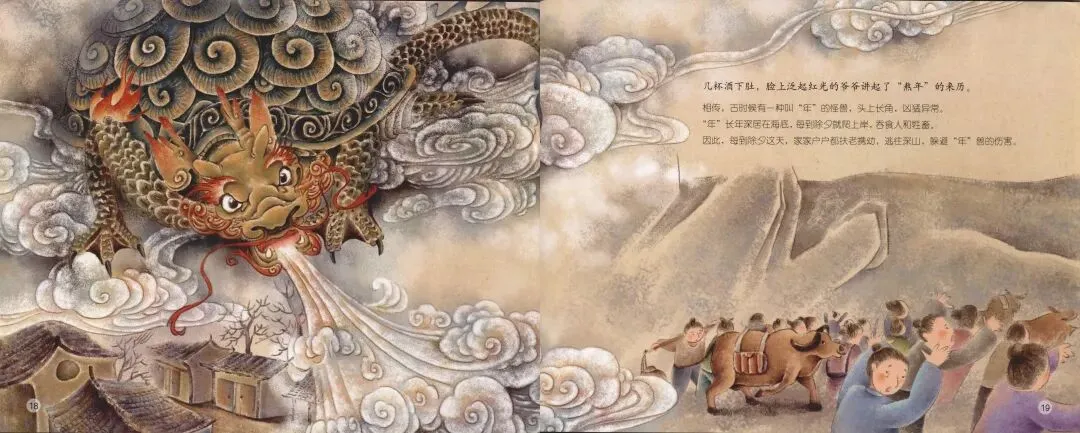
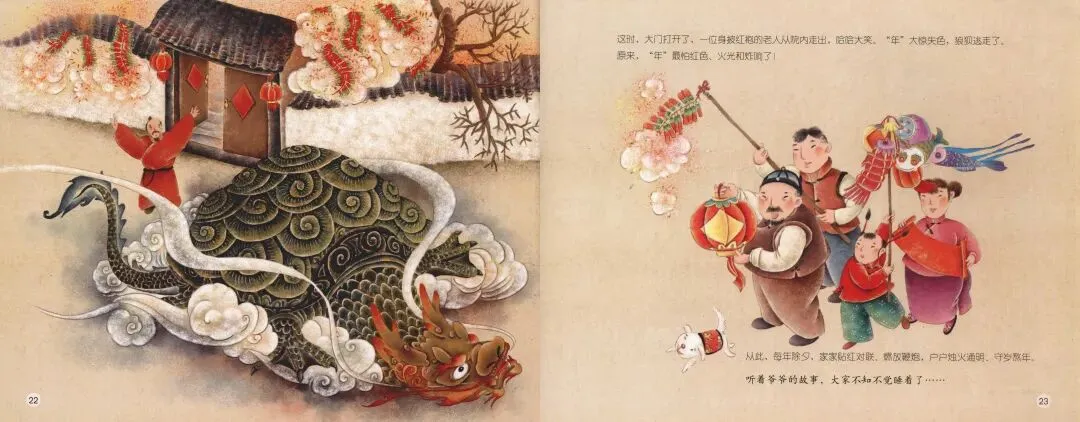
几杯酒下肚、脸上泛起红光的爷爷讲起了“熬年”的来历。那一刻,现实与神话悄然交融。那个头上长角、凶猛异常的“年”兽,实则是古人面对未知灾难的心理投射——它可以是瘟疫、战乱、饥荒,也可以是所有令人恐惧的“非常态”。而红对联、鞭炮声、烛火通明,则是人类用象征的力量战胜恐惧的智慧结晶。听着爷爷的故事,大家不知不觉睡着了……
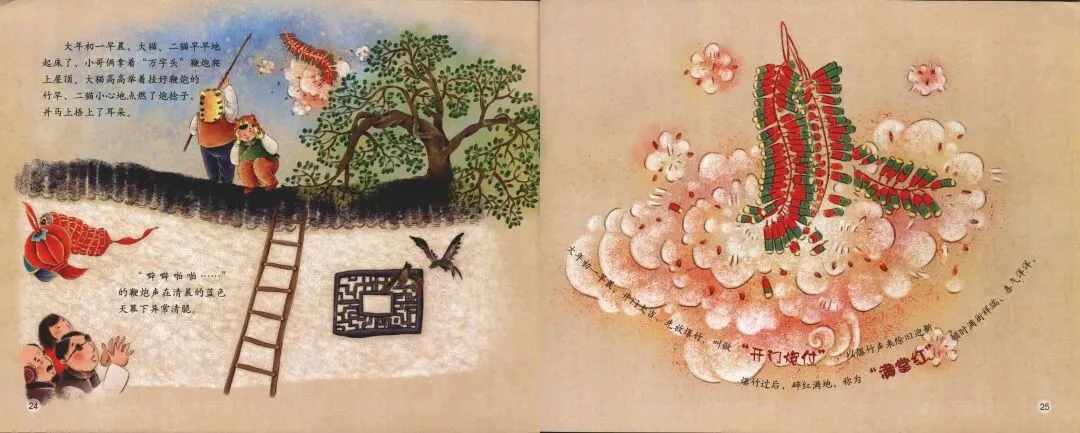
大年初一的清晨,鞭炮在屋顶炸响,“万字头”连绵不断,叫做“开门炮仗”;碎红满地,称为“满堂红”。这一幕,是全书情绪的高潮,也是希望的开启。“开门炮仗”不只是热闹,更是一种宣言:旧岁的阴霾已被驱散,新年的阳光正洒落人间。
孩子们穿上新衣,磕头拜年,接过长辈的压岁钱。“压岁”原意为“压祟”,把鼓鼓囊囊的红包压在枕头底下,据说能镇住噩梦,护住童年的梦乡。在压岁红包中,长辈递出的是一份份沉甸甸的祝福与护佑;这一刻,礼仪、祝福与爱彼此交织,构成春节一个核心的精神图景。
而村子里,在响成一片的鞭炮声中,“龙腾虎跃人间乐,鸟语花香天下春”的春联高悬在村口:字是墨黑的,纸是鲜红的,风一吹,像是要把整个春天都迎进门来。这不仅是诗句,更是一个民族对美好生活的永恒向往。
在这本薄薄的绘本里,没有宏大叙事,没有说教口号,有的只是灶台边的一缕蒸汽、火盆里的一簇火星、孩子嘴角的一滴油光;有的只是吃饺子“咯嘣”一声咬到硬币的惊喜、“守岁”时融化在烤花柴中的暖意、除夕时仰望夜空烟花绽放的喜悦……绘本告诉我们:传统并非博物馆里冰冷的展品,而是代代相传的情感记忆。正是这些细碎如尘的瞬间,织成了我们心中最厚重的“年”。
这本绘本最动人的地方,正是在这些细碎却真实的场景里。它不教人“春节是什么”,而是让人想起——原来过年,就是这样:有声响,有热气,有人等你回家,有灯为你点亮。当这样的画面被孩子们记住,春节就不只是一种传统,而会变成一种心里的归处。哪怕将来走得再远,只要想起这顿饺子、这盆火、这满地碎红,就知道,年,一直都在。
因为真正的年,不在日历上,而在灯火可亲处。因为它从来不是一个日子,而是一种归途——回到童年,回到故乡,回到亲人身边,去重演记忆深处那场永不散席的团圆;也在万家灯火如星、岁月静好如诗中感受一个民族的温度。
附:2015年1月的新年,4岁多的我在幼稚园时画的福字;
2016年1月的新年,5岁多的我在幼稚园时画的财神爷;
2019年2月15日,我小学三年级8岁时的作文《逛庙会》。妈妈曾经为我记录下这篇作文的写作过程:一向喜欢放飞想象、写意不写实的自己,用了整整两天的时间,独自苦苦构思、在妈妈指导下反复修改。中间哭闹好几次、崩溃好几回,放弃又再坚持,终于有了这一篇定稿。稿件完成之时,我扔下笔抱着妈妈欢呼,恨不得像小鸟飞上云霄:“妈妈,妈妈,没想到我也能写得这么好!”
还记得当时妈妈告诉我:天鹅如果被企鹅养大,即使有翅膀,也不知道自己会飞;反过来,企鹅如果被天鹅养大,它只会恨自己的翅膀太小,却不会知道自己是游泳高手。我的爸爸妈妈会帮助我:在人生缓慢的成长中守候我,为我打开一扇又一扇通往美好的门;但无论我是天鹅还是企鹅,也要张开翅膀为自己开路。今天,15岁的我知道:阅读与写作,就是一条我要坚定走下去的通往美好的道路。




![ITZY[2019-2024年]所有歌曲专辑合集5.13GB](https://img.bim99.cn/ssd/ssd4/117/2026-04-25/117_17771226394240.webp)